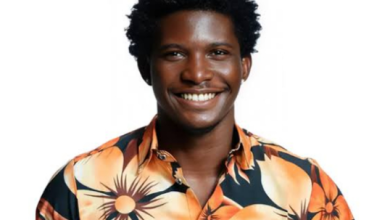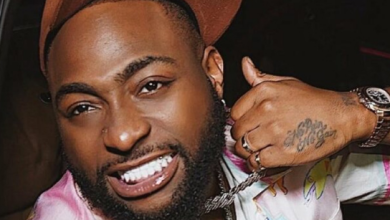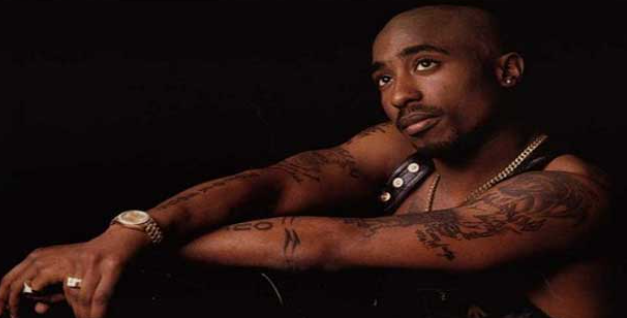
Nearly 30 years after Tupac Shakur was gunned down on a Las Vegas street, the long-awaited trial over the rap icon’s killing begins Monday, bringing one of America’s most famous unsolved murders back into the spotlight.
Duane “Keffe D” Davis, a former leader of the South Side Compton Crips, is facing trial in connection with the 1996 shooting that claimed Shakur’s life.
Prosecutors allege that Davis orchestrated the attack after a confrontation involving his nephew, Orlando “Baby Lane” Anderson, and supplied the firearm used in the drive-by shooting.
Davis, now 63, has pleaded not guilty. If convicted, he could spend the rest of his life behind bars without the possibility of parole.
Yet even after three decades of speculation, the trial may not finally answer the biggest question surrounding Shakur’s death: who actually pulled the trigger?
A Night That Changed Hip-Hop
Shakur was just 25 when his life ended on September 7, 1996.
Earlier that evening, the rapper had attended a Mike Tyson boxing match at the MGM Grand in Las Vegas alongside Death Row Records boss Marion “Suge” Knight.
After the fight, Shakur and Knight were involved in a physical confrontation with Anderson, who was Davis’s nephew and a member of the Crips.
According to prosecutors, the confrontation sparked a revenge plot.
Later that night, a white Cadillac carrying Davis, Anderson and other men pulled alongside the vehicle carrying Shakur and Knight. Gunfire erupted from the Cadillac, leaving Shakur critically wounded.
He died several days later.
The shooting occurred during one of hip-hop’s most intense rivalries, when the industry was divided between the West Coast and East Coast scenes.
Shakur had become the face of West Coast rap through Death Row Records, while Bad Boy Records, led by Sean “Diddy” Combs, represented a powerful East Coast force.
Wallace, one of Bad Boy’s biggest stars and Shakur’s former rival, was himself murdered in Los Angeles less than six months later.
Both killings became defining tragedies of the era.
The Memoir That Changed Everything
For years, the investigation struggled to produce enough evidence for an arrest.
Then, in 2019, Davis published a memoir that prosecutors say helped breathe new life into the case.
Davis described being in the front passenger seat of the Cadillac on the night Shakur was shot and said he handed a handgun to people sitting in the back.
But he did not identify the person who fired the fatal shots.
Those revelations, combined with earlier comments Davis had made publicly, eventually put him at the centre of the investigation.
He was arrested in September 2023.
Davis has since rejected the prosecution’s account and insists he had nothing to do with Shakur’s killing.
“I’m innocent. I ain’t killed nobody. Never did ever kill nobody,” Davis said in a 2025 interview from prison.
“They don’t have no evidence against me. They can’t even put me in Las Vegas.”
He has also claimed that he was in Los Angeles when Shakur was killed and said he never actually read the memoir bearing his name.
According to Davis, his co-author expanded on information he provided in order to make the book more commercially appealing.
“I just gave him details of my life,” Davis said. “And he went and did his little investigation and wrote the book on his own.”
Davis’s lawyers unsuccessfully fought attempts to prevent prosecutors from presenting his memoir as evidence.
They also sought to exclude statements he made to police in 2008 while being interviewed as a witness.
Jury selection is expected to take about a week, with the entire proceedings potentially lasting a month.
But a guilty verdict may not settle every mystery surrounding Shakur’s death.
The rapper’s family has continued to seek accountability beyond the criminal case.
In May, Shakur’s stepbrother, Maurice Shakur, filed a wrongful-death lawsuit, arguing that others connected to the killing have escaped responsibility.
“There remain individuals who were involved in Tupac’s murder who, for 30 years, have not been held accountable for their crimes,” the lawsuit states.
The civil case also references a recent documentary series and allegations surrounding Sean Combs, who is currently imprisoned.
For millions of fans who watched Shakur rise from a young rapper to one of hip-hop’s most influential figures, the Las Vegas courtroom represents more than another criminal trial.
It is a long-delayed reckoning with a murder that has remained shrouded in mystery for nearly a generation.