Iran has hardened its position over the Strait of Hormuz, warning that the crucial waterway will remain closed to shipping until the United States changes its stance and accepts Tehran’s conditions for ending the conflict.
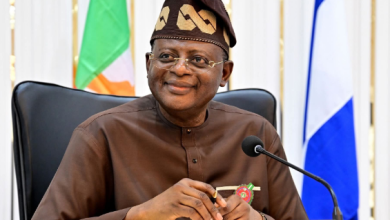
The warning, issued by newly appointed Secretary of Iran’s Supreme National Security Council, Mohsen Rezaei, has further clouded diplomatic efforts to restore commercial traffic through one of the world’s most important energy corridors.
“As long as America does not change its behaviour and does not accept Iran’s conditions, the Strait of Hormuz will not be opened,” Rezaei was quoted as saying by Iran’s semi-official Tasnim news agency.
Among Tehran’s demands are an end to the war, the release of frozen Iranian assets and an end to hostilities across the region, including in Lebanon and Gaza.
The latest declaration has dashed some expectations that separate discussions involving Iran and Oman could quickly restore normal maritime traffic.
Rezaei made clear that any arrangement concerning the passage of vessels would not necessarily amount to an agreement to fully reopen the waterway.
The uncertainty immediately reverberated through global energy markets, with oil prices climbing sharply before easing.
Brent crude rose above $90 a barrel during Tuesday trading before retreating, while U.S. West Texas Intermediate also advanced.
On Wednesday, Brent was around $89.66 and WTI near $83.92 as concerns over supply disruptions persisted.
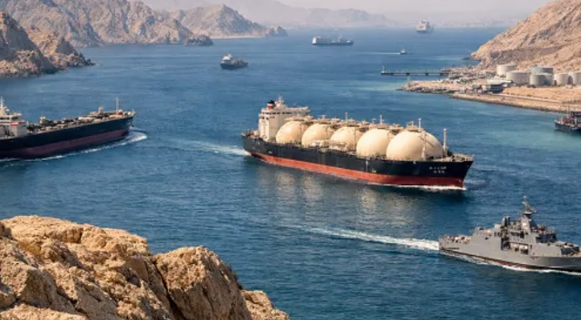
The Strait of Hormuz is critical to the global energy system. Before the conflict, roughly one-fifth of the world’s oil and liquefied natural gas supplies moved through the waterway.
Shipping activity has now fallen dramatically. Kpler data showed only eight vessels passing through the strait on Tuesday, compared with a typical pre-conflict level of roughly 130 to 140 vessels a day.
The prolonged disruption is already affecting regional production.
The U.S. Energy Information Administration has estimated that about 5.5 million barrels per day of Middle Eastern oil production was shut in during July, while some regional output is expected to remain offline through 2027.
The latest Iranian position comes despite recent indications that negotiations involving Oman and the United States could produce an arrangement allowing commercial shipping to resume.
A U.S. official had earlier said progress was being made in talks involving Iran and Oman, with the possibility of a deal that would permit vessels to move through Hormuz.
Pakistan has also played a mediation role, with Defence Minister Khawaja Asif recently suggesting that Washington and Tehran were approaching an understanding.
But Tehran’s latest statements suggest that fundamental disagreements remain.
Iran has already conveyed its conditions to the United States through mediators, according to Rezaei. Mohammad Mokhber, an adviser to Iran’s supreme leader, separately wrote on X that “the punishment of the aggressor continues” and that the strait would remain closed until Iran’s demands were met.
U.S. President Donald Trump has meanwhile adopted a mixture of threats and diplomatic signals, while demanding compensation from Iran for decades of damage.
“We’re going to ask for money for the damage they’ve done over a 50-year period,” Trump said at the White House.
In another interview, he said Washington was weighing whether to allow Iran’s economy to deteriorate or strike the country “really, really hard.”
The conflicting positions have increased uncertainty over whether negotiations can produce a durable ceasefire and restore the flow of commercial shipping.
The security crisis is also reaching other maritime routes.
Fresh attacks have been reported in the Gulf of Oman and the Red Sea, raising concerns that commercial vessels could face risks well beyond the Strait of Hormuz.
With traffic through Hormuz already near a standstill, any prolonged disruption could continue to place upward pressure on energy prices, freight costs and global supply chains.
The confrontation has also raised extraordinary security concerns around President Trump.
Reports have emerged that Trump secretly changed aircraft during a journey from Turkey last month after attending a NATO summit, in what was described as a security measure linked to concerns over a potential Iranian assassination attempt.
Trump had publicly been expected to leave Turkey aboard an aircraft donated by Qatar that is intended to become the new Air Force One.
Instead, officials announced that he would depart on an older presidential aircraft.
The operation was reportedly a decoy.
After boarding the older Air Force One in Ankara, Trump secretly transferred through a catering vehicle to a smaller Air Force C-32A.
The aircraft then departed separately for Britain before Trump eventually boarded the Qatari aircraft at RAF Mildenhall for the remainder of his journey to Washington.
The unusual arrangement became apparent through details from the presidential travel pool, including instructions for journalists aboard the older Air Force One to keep their press-cabin window shades closed.
Trump later told reporters they were “probably on a dangerous flight” because of the threats facing him.
White House spokesman Steven Cheung defended the Qatari aircraft, saying it had been equipped with “high-level security protocols” to protect the president and his staff.
The episode underscores the wider security implications of the conflict, as Washington and Tehran remain locked in a confrontation where the Strait of Hormuz, regional shipping and the threat of further military escalation have become central pressure points.
For global energy markets, the immediate concern is increasingly straightforward: how long can the world’s most important oil corridor remain effectively closed before the disruption becomes a much larger global economic shock?