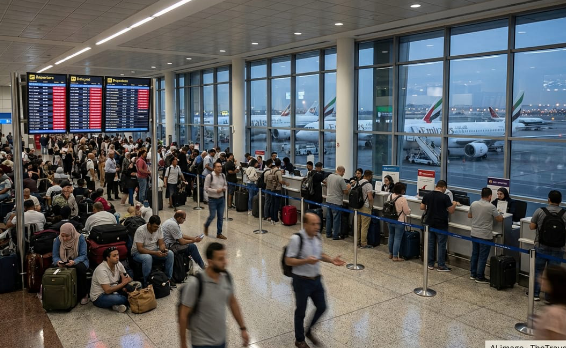
Global aviation has been plunged into turmoil as escalating conflict in Iran forces the closure of major Middle Eastern air hubs, including Dubai, Doha, and Abu Dhabi, stranding tens of thousands of passengers worldwide.
Airlines across Europe, Asia, and North America have been compelled to cancel or suspend numerous routes, with destinations such as Tel Aviv, Beirut, and Amman most severely affected.
European carriers Air France and KLM announced the suspension of multiple Middle East routes, while Delta Air Lines halted its New York–Tel Aviv service and postponed the resumption of flights between Atlanta and the region until August.
Middle Eastern airlines, including Emirates and Etihad Airways, have operated on reduced schedules following partial reopenings of restricted airspace.
Asia-based airlines have followed suit. Cathay Pacific and Japan Airlines confirmed temporary suspension of flights to major Gulf destinations, citing safety concerns and limited airspace availability.
European operators, including the Lufthansa Group, British Airways, and Finnair, have rerouted or canceled flights to avoid airspace over Iran, Iraq, Syria, and Israel.
Low-cost and regional carriers, such as Wizz Air, Pegasus Airlines, and Flynas, have extended suspensions on Middle Eastern routes, with some disruptions expected to last until September.
Qatar Airways confirmed that its operations remain temporarily halted due to closed Qatari airspace, with only a handful of flights expected to resume over the next few days.
Aviation experts emphasised the strategic role of the Middle East as a critical global hub.
“These closures ripple across the world’s air travel networks,” said an industry analyst.
“Airlines are forced to reroute flights, delay schedules, and absorb significant operational costs.”
Passengers have reported long waits at airports and extensive flight delays, highlighting the broader human impact of the conflict on international mobility.
The crisis underscores the vulnerability of global air travel to geopolitical tensions in strategically important regions.
The disruption continues to evolve as governments and airlines monitor airspace restrictions and regional security developments.