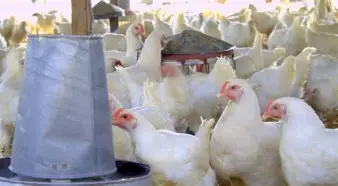
The Federal Government has unveiled a newly developed chicken breed, named Moorbeta, alongside 57 high-yield crop varieties, in a bid to enhance meat production, improve nutrition, and strengthen food security across Nigeria.
The announcement was made on Thursday during the 36th meeting of the National Committee on Naming, Registration and Release of Crop Varieties, Livestock Breeds, and Fisheries, held in Ibadan.
The meeting was organised by the National Centre for Genetic Resources and Biotechnology and presided over by the Chairman of the National Variety Release Committee, Professor Soji Olufajo.
Olufajo explained that the new chicken breed and the 57 crop varieties, which were drawn from 14 different crops, were carefully evaluated and recommended by the committee’s technical sub-committees.
He encouraged farmers to take advantage of the opportunity by obtaining improved seeds and breeding materials to increase productivity.
He also called on agricultural extension agents to ensure that farmers were well informed about the new developments, and urged research institutes, breeders, geneticists, and other stakeholders to continue contributing to the growth and development of agriculture in Nigeria.
Olufajo said the new chicken breed and crop varieties would have a lasting impact on Nigeria’s food production, and encouraged all stakeholders to continue supporting research and innovation in agriculture to drive national development.
The newly released chicken breed, Moorbeta, developed by the Institute of Agricultural Research and Training in Ibadan, is a meat-type bird that stands out for its high body weight at 10 weeks, favorable carcass characteristics, and tolerance to heat stress.
Experts said there would be mass production of the breed due to its significant potential in meeting national demand for poultry meat.
Among the 57 crop varieties released are improved types of soyabean, yam, potato, onion, tomato, rice, pepper, eggplant, Musa species, cotton, maize, groundnut, and sorghum.
Notable varieties include two plantains (HORTIPLAN 1 and 2) and two bananas (HORTIBAN 1 and 2) developed by the National Horticultural Research Institute, Ibadan.
The plantain varieties were approved for their heavy bunches, yellow pulp, suitability for boiling, frying, roasting, flour-making, long shelf life, and high carotenoid content.
The banana varieties were recognised for their sweet taste, thick peel, large pulp, and intermediate bract apex shape.
The yam varieties, UMUDr37 and UMUDr38, sponsored by the National Root Crops Research Institute in collaboration with the International Institute of Tropical Agriculture, were released based on early maturity, good pounding quality, and excellent boiling quality.
The potato variety Connect was approved for its large tubers, resistance to late blight, and suitability for table consumption.
Six onion varieties, including dry-season and wet-season types, were released for their pungency, large bulb size, and disease resistance.
Five tomato varieties, HORTITOM 6 and 7, and SP TOM 1, 2, and 3, were released for their heat tolerance, early maturity, disease resistance, and adaptability under both dry and rainy conditions.
The five rice varieties, FARO 73, SG Rice 1 and 2, MIP 5803, and 4802, were approved for their long, slender grains, drought tolerance, and good tillering capacity.
The committee also approved one pepper variety, SP PEP 1, and three eggplant varieties, HORTICUM 1, 2, and 3, which were recognized for early maturity and high vitamin C content.
Additionally, the committee registered 15 maize varieties, four groundnut varieties, one proprietary sorghum, four cowpea public varieties, and six proprietary cotton varieties.
The NVRC approved the release and registration of all varieties based on recommendations from its technical sub-committees.
The sub-committee on crop varieties, chaired by Professor Shehu Ado, reviewed 59 submissions, ultimately recommending 57 for approval.
The livestock and fisheries sub-committee, chaired by Professor Waheed Akin-Hassan, evaluated the single new chicken breed submission before recommending it to the NVRC for final registration.
The meeting was attended by agricultural researchers, breeders, scientists, and stakeholders from research institutes and universities across the country.
The officials emphasised that the release of these new varieties marks a significant step toward increasing agricultural productivity, ensuring food security, and improving the nutritional well-being of Nigerians.
News