The United Kingdom has reaffirmed its commitment to partnering with Nigeria to strengthen implementation of reforms, reduce bureaucratic bottlenecks, and create a predictable business environment that attracts investment, generates jobs, and supports long-term growth.
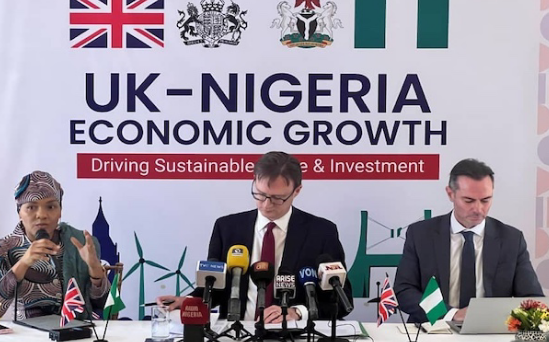
Alice Clarke, Head of Macroeconomic Stability at the British High Commission in Nigeria, stated this over the weekend at ‘The Reform and Diplomatic Roundtable 2026’, organised by the Presidential Enabling Business Environment Council (PEBEC) in collaboration with the UK’s NEST programme.
NEST is a UK–Nigeria partnership focused on supporting macroeconomic reforms and improving the investment climate in Nigeria.
Clarke noted, “Businesses don’t experience reform in theory. They feel it in permits, power connections, and how institutions respond when things go wrong.
”Today’s assessment gives us a clear picture of where progress is happening and where consistency must improve.”
Presenting Nigeria’s Investment Outlook 2026: From Reform to Real Capital Deployment, Afolabi Imoukhuede, a NEST expert, described the outlook as “cautiously positive,” citing improved macroeconomic credibility, fiscal and policy adjustments, and Central Bank of Nigeria (CBN) support.
He referenced the International Monetary Fund (IMF) projection that Nigeria’s economy will grow by 4.4 per cent in 2026, signaling a return of investor confidence.
However, Imoukhuede cautioned that investment capital remains selective and risk-aware. While portfolio capital is flowing in, foreign direct investments (FDIs) into the real sector remain crucial.
He stressed that macroeconomic stabilisation must translate into bankable real-sector projects that generate jobs, earn foreign exchange, and increase domestic production.
He identified priority sectors for FDIs:
Agriculture and agro-processing
Manufacturing and industrial clusters
Logistics and trade infrastructure
Power and renewable energy among others.
Imoukhuede recommended that the top 10 states in PEBEC’s Ease of Doing Business (EoDB) ranking be developed as FDI “Landing Zones,” offering faster approvals, predictable regulations, improved land and permit systems, stronger investor engagement, and digital governance improvements.
In a keynote address, Minister of Budget and Economic Planning Senator Abubakar Bagudu emphasised that Nigeria’s federal structure gives states and local governments significant authority to attract investment and drive growth.
He highlighted that Chapter 2 of the Federal Constitution recognises Nigeria as a constitutional market economy, and Section 13 mandates collaboration among all levels of government to achieve national objectives.
Bagudu said Nigeria’s goal of building a $1 trillion economy by 2030 depends heavily on active participation from states and the private sector.
He added that competition among states, supported by reforms and development programs from institutions like the World Bank, has improved economic performance, while Nigeria’s entrepreneurial population provides a strong foundation for innovation and growth.