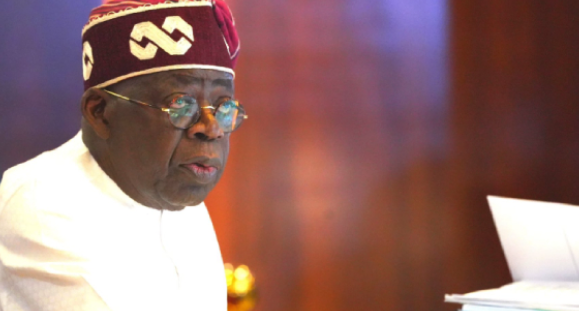
President Bola Tinubu has approved a N3.3 trillion payment plan to settle long-standing debts in Nigeria’s power sector, a move the Federal Government says will boost electricity supply and restore investor confidence.
The approval was disclosed in a statement issued on Sunday by the President’s Special Adviser on Information and Strategy, Bayo Onanuga.
According to the statement, the decision followed a comprehensive review of legacy debts accumulated over a decade under the Presidential Power Sector Financial Reforms Programme, covering the period from February 2015 to March 2025.
“Following verification, N3.3 trillion has been agreed as a full and final settlement, ensuring a fair and transparent resolution,” the statement read in part.
The government confirmed that implementation of the repayment plan is already underway.
So far, 15 power generation companies have signed settlement agreements valued at N2.3 trillion.
The statement also revealed that N501 billion has been raised to fund the initiative, with N223 billion already disbursed, while additional payments are in progress.
The Presidency noted that settling the debts is expected to improve liquidity across the power value chain, which should result in more stable electricity generation and better service delivery nationwide.
President Tinubu also commended stakeholders for their contributions toward resolving the long-standing challenges and confirmed that the next phase of the programme, known as Series II, will commence within the current quarter.
Providing further insight into the programme, the Special Adviser on Energy to the President, Olu Arowolo-Verheijen, said the initiative extends beyond clearing debts.
“This programme is not just about settling legacy debts. It is about restoring confidence across the power sector, ensuring gas suppliers are paid, power plants can keep running, and the system begins to work more reliably,” she said.
She explained that the payment plan forms part of broader reforms in the sector, including improved metering systems and the introduction of service-based tariffs.
“It is part of a broader set of reforms already underway, including better metering and service-based tariffs that link what you pay to the quality of electricity you receive,” she added.
According to her, the government is prioritising electricity supply to businesses, industries, and small enterprises, stressing that reliable power remains critical for job creation, economic growth, and sustaining livelihoods.
“The goal is simple: more reliable power for homes, stronger support for businesses, and a system that works better for all Nigerians,” she said.
Nigeria’s power sector has long struggled with instability, marked by frequent grid collapses, low generation capacity, and persistent outages affecting households and businesses.
A 2024 report by Africa Trade Barometer highlighted the economic impact of these challenges, estimating that Nigeria loses about $26 billion annually due to power shortages.
The report further noted that businesses spend roughly $22 billion each year on off-grid fuel to mitigate unreliable electricity supply, significantly increasing operational costs.
“Economic losses arising from Nigeria’s electricity shortages are estimated to be USD 26 billion annually, without accounting for spending on fuel for off-grid generators, which is estimated to be a further USD 22 billion,” the report stated.
It added that many businesses in Nigeria operate under a national grid that frequently collapses and struggles to meet peak demand, which is estimated to be nearly four times higher than current generation capacity.