U.S. President Donald Trump has said he is “not satisfied” with a new Iranian negotiating proposal, as diplomatic efforts to end the prolonged U.S.–Iran conflict remain frozen despite a ceasefire in place for several weeks.
Iran reportedly delivered the proposal to mediator Pakistan on Thursday evening, according to Iran’s IRNA news agency, though the contents were not disclosed.
The move comes amid stalled diplomacy and only one unsuccessful round of direct talks between both sides.
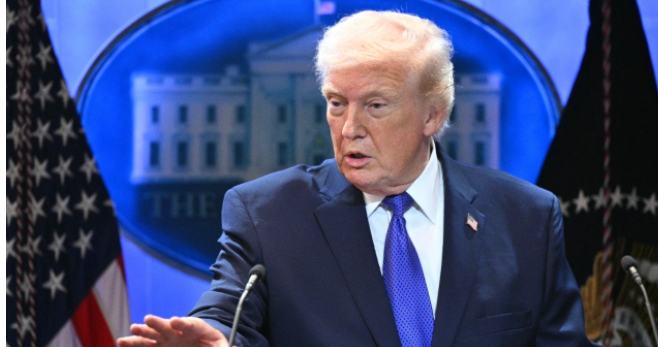
“At this moment I’m not satisfied with what they’re offering,” Trump told reporters, blaming the lack of progress on what he described as “tremendous discord” within Iran’s leadership.
He also restated the stark choices facing Washington:
“Do we want to go and just blast the hell out of them and finish them forever — or do we want to try and make a deal? I mean, those are the options,” he said, adding that he would “prefer not” to take military action “on a human basis”.
The war, launched through coordinated U.S. and Israeli strikes on February 28, has been on hold since April 8, but has not moved beyond fragile diplomacy.
Iran and the United States have only held one failed round of direct negotiations since hostilities began.
Hormuz crisis and economic pressure
Despite the ceasefire, tensions remain high. Iran continues to maintain pressure on the Strait of Hormuz, a key global shipping route, disrupting oil, gas, and fertiliser flows.
In response, the U.S. has imposed countermeasures targeting Iranian ports.
Although fighting has paused, both sides remain entrenched. Iran’s judiciary chief, Gholamhossein Mohseni Ejei, said the country remains open to dialogue:
“the Islamic Republic has never shied away from negotiations,” he said.
However, he stressed limits to compromise, adding: “we certainly do not accept imposition.”
A resident in Tehran, Amir, described the situation as stagnant and bleak:
“This feels like we are stuck in purgatory,” he said, warning that another round of strikes appears likely.
Energy markets reacted sharply to the renewed uncertainty.
Oil prices briefly fell after news of Iran’s proposal, dropping nearly five per cent, but remain about 50 percent higher than pre-war levels due to disruptions in the Strait of Hormuz.
The U.S. has also expanded sanctions,
targeting three Iranian foreign exchange firms and warning others against facilitating transactions linked to Tehran.
On Thursday, U.S. military officials claimed the blockade had prevented Iran from exporting about $6 billion in oil, while Iranian inflation reportedly exceeded 50 percent.
A 28-year-old Iranian, Mahyar, described worsening living conditions:“For many people, paying rent and even buying food has become difficult, and some have nothing left at all,” he said.
In Washington, debate is growing over whether Trump must seek congressional approval under war powers rules.
His administration argues that the ceasefire pauses the legal deadline requiring congressional authorisation.
Trump insisted the US is “in the midst of a big victory,” despite rising domestic pressure linked to inflation and the absence of a clear end to the conflict ahead of November elections.
The crisis has also expanded into international maritime security. France and Britain are leading efforts to build a coalition to reopen the Strait of Hormuz once peace is restored, while the U.S. has separately announced its own initiative.
French Foreign Minister Jean-Noel Barrot said the US plan is “not of the same nature” as the European effort, but could act as a “sort of complement.”
Meanwhile, U.S. naval deployment continues to shift. The aircraft carrier USS Gerald R. Ford has left the Middle East after operations linked to the conflict, though two other carriers remain in the region.
The situation remained fluid, with diplomacy stalled, military tensions unresolved, and global oil markets reacting sharply to every development.