The Lagos State Government has warned that Nigeria’s housing crisis could worsen dramatically, with the country’s effective housing deficit projected to rise to nearly 28 million units if urgent and sustained interventions are not implemented.
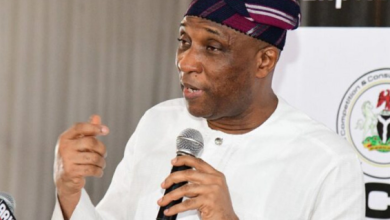
The alarm was raised by the Lagos State Commissioner for Housing, Moruf Akinderu-Fatai, during a ministerial press briefing organised to mark the seventh anniversary of Governor Babajide Sanwo-Olu’s administration.
According to the commissioner, Nigeria’s housing shortage remains one of the country’s most pressing socio-economic challenges, particularly in major urban centres experiencing rapid population growth.
Akinderu-Fatai disclosed that findings from the National Housing Data Technical Committee, inaugurated by the Federal Ministry of Housing and Urban Development, currently place Nigeria’s official housing deficit at 14.925 million units.
However, he noted that the actual situation is more severe than official estimates suggest.
The commissioner explained that an additional 15.2 million homes across the country have been classified as structurally defective or substandard, effectively pushing the nation’s housing shortage close to 28 million units.
He warned that the widening gap between housing demand and supply poses serious threats to urban development, economic productivity, and social stability.
According to him, the consequences are particularly visible in highly populated cities such as Lagos, where pressure on housing infrastructure continues to intensify.
Akinderu-Fatai stated that Lagos remained the centre of housing demand in Nigeria due to its rapidly expanding population and economic opportunities.
He said the state’s population is currently estimated at more than 17.8 million people, with an annual growth rate approaching 3.8 per cent.
The commissioner attributed the growing housing shortage to several factors, including rapid urbanisation, continuous rural-to-urban migration, and the state’s limited landmass.
Independent estimates, he noted, place Lagos State’s housing deficit at over 3.3 million units.
According to him, the shortage is most severe among low-income and middle-income residents who struggle with rising property costs and limited access to affordable housing options.
He added that affordability remained one of the biggest barriers preventing many Lagos residents from owning homes.
Despite the challenges, the commissioner said both the Federal Government and Lagos State Government have intensified efforts to address the housing crisis through policy reforms, public-private partnerships, and large-scale housing projects.
He highlighted some of the Federal Government’s intervention programmes aimed at improving access to affordable housing finance.
Among them is the Ministry of Finance Incorporated Real Estate Investment Fund (MREIF), which offers mortgage loans at a single-digit interest rate of 9.75 per cent with repayment periods extending up to 20 years.
According to Akinderu-Fatai, such initiatives are expected to reduce financial barriers and improve access to home ownership for ordinary Nigerians.
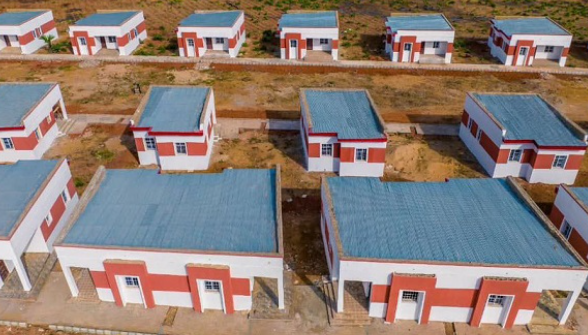
The commissioner further revealed that the Lagos State Government has delivered 10,623 housing units over the last seven years through direct government funding and Public-Private Partnership arrangements.
He added that ongoing housing projects across the state are expected to increase the figure to more than 14,000 units before the end of 2026.
Akinderu-Fatai reaffirmed the state government’s commitment to increasing the supply of affordable housing while reducing obstacles faced by prospective homeowners.
He stated that the administration’s housing programmes are not only providing accommodation but also generating employment opportunities and stimulating economic activities within the construction and real estate sectors.
According to him, expanding access to decent housing remains a critical part of the government’s broader urban development strategy.
The commissioner stressed that sustained collaboration between government agencies, private investors, developers, and financial institutions would be essential to effectively tackle the country’s growing housing challenges.