Iran has accused the United States and Israel of violating a recently agreed ceasefire arrangement, warning that the alleged breaches could undermine the fragile truce and further escalate tensions across an already volatile region.
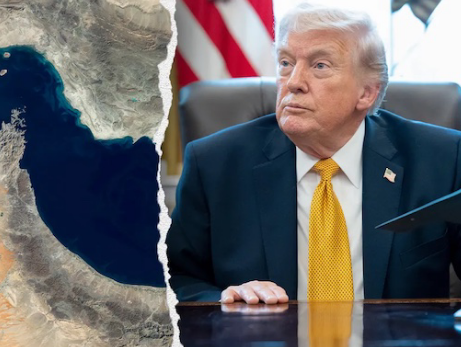
The dispute comes amid renewed diplomatic friction following Iran’s announcement regarding the closure of the strategically vital Strait of Hormuz, alongside its condemnation of continued Israeli military operations in Lebanon despite the ceasefire framework intended to end hostilities.
Tehran said the alleged actions by Washington and Tel Aviv amount to violations of the agreement, raising doubts about the durability of the ceasefire deal.
Iran’s Foreign Ministry spokesman, Esmail Baghaei, stated that Tehran would raise its concerns during upcoming negotiations scheduled to take place in Bürgenstock, Switzerland.
According to Baghaei, the talks will centre on ensuring full compliance with the terms of a recently concluded 14-point US–Iran agreement.
Mediator Pakistan had earlier confirmed that both United States and Iranian representatives are expected to participate in the Swiss discussions, which are seen as a critical test of diplomatic progress.
Baghaei said Iran’s participation would focus on compelling the other parties to meet their obligations under the deal.
“Negotiations for a final agreement will begin only when the commitments set out in paragraphs 1, 4, 5, 10 and 11 have started to be implemented and continue to be carried out,” he said.
He added that Iran would use the talks to press for enforcement of those provisions, stressing that implementation remains a key condition for any broader settlement.
Diplomatic observers said the latest exchange of accusations has heightened uncertainty around the ceasefire, which has already been described as fragile.
Analysts warned that continued mistrust between the parties could derail efforts to secure a long-term political solution and further destabilise regional security.
Meanwhile, the United States Central Command (CENTCOM) said maritime traffic through the Strait of Hormuz remains uninterrupted despite Tehran’s announcement.
It reported that 55 vessels successfully transited the waterway, underscoring continued global reliance on the critical shipping route.
The Strait of Hormuz remained one of the world’s most sensitive maritime corridors, serving as a major passage for global crude oil and liquefied natural gas exports.
Any disruption to navigation in the area is widely viewed as having the potential to trigger significant shocks in international energy markets.
Attention is now shifting to the outcome of the upcoming Switzerland talks, which are expected to determine whether the ceasefire can be stabilised or whether tensions between Iran, the United States and Israel would continue to escalate.
The international community is closely monitoring developments, as the outcome could have far-reaching consequences for regional security and global economic stability.