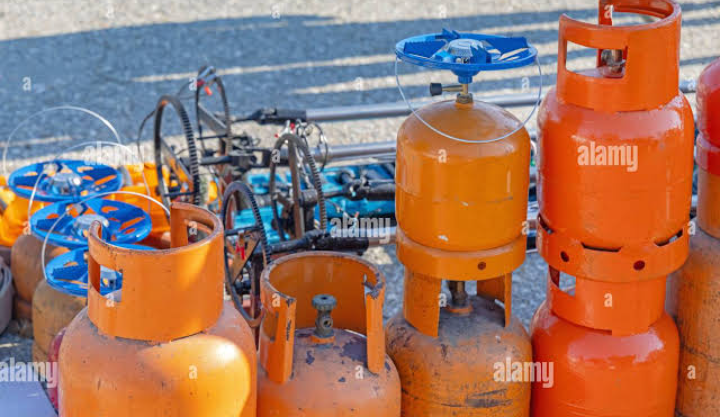
Consumers of cooking gas say persistent increases in prices are forcing them to significantly reduce consumption and rethink how they manage household cooking energy needs on a daily basis.
They said the cost of refilling 12kg gas cylinders has become increasingly difficult and unable to maintain previous consumption patterns due to financial pressure.
Some consumers who spoke in an interview with the News Agency of Nigeria (NAN) in Asaba, said, the situation is having a toll on them.
Mrs Agnes Outdoor, a civil servant said, ”This situation is getting worse for families, and many of us are struggling to keep up with the rising cost of cooking gas. ”
She added that she now ration her cooking gas usage by reserving it only for essential meals in order to make limited refills last longer than before.
For Mrs Grace Eze, a trader, ”I have shifted from purchasing 12kg cylinders to smaller 2kg refills, because this is more affordable and easier for me to manage under this current economic conditions.”
According to Mr Philip Imoni, a commercial bus driver, I now buy in smaller quantities because it is the only way I can cope with the constant price increases.
NAN reports that some consumers said they only purchase cooking gas when it is absolutely necessary, avoiding regular refills and adjusting their cooking habits to reduce overall household expenditure.
They, however, noted that firewood is also becoming increasingly costly and less sustainable, leaving families with limited and less efficient cooking options.
Mrs Udoka Nduka, a pity trader said, “we still go back to firewood when the gas finishes, even though it is not convenient and sometimes also expensive.
Meanwhile, domestic gas dealers said they are also experiencing the impact of rising prices, as reduced patronage and shrinking demand continue to affect their daily sales operations.
The Chairman of Ika Liquefied Petroleum Gas Dealers Association in Delta, Mr Eze Nnyeka, explain that they currently purchase cooking gas at N2,000 per unit and sell it at approximately N2,200, leaving very slim profit margins.
“We are operating with very small margins, and after expenses, there is almost nothing left to sustain the business,” a gas retailer said during the interview.
Nnyeka also said that customer turnout has dropped significantly, as many households now reduce the quantity of gas they purchase at any given time.
According to dealers, sales of larger 12kg cylinders have declined sharply, as more customers now opt for smaller refills or delay purchases entirely.
He also disclosed that the cost of setting up and maintaining a gas retail business has increased significantly compared to previous years.
“Before now, about N1 million could comfortably set up this business, but today it requires at least N5 million to start and sustain operations,” he said.
Nnyeka therefore warn that continued increases in cooking gas prices could worsen energy poverty and slow the adoption of cleaner cooking fuel alternatives across the country.
NAN