Governor Douye Diri of Bayelsa has called on Nigeria’s coastal states to take full advantage of their vast marine resources to drive economic growth, create jobs and position the country as a leading force in the global blue economy.
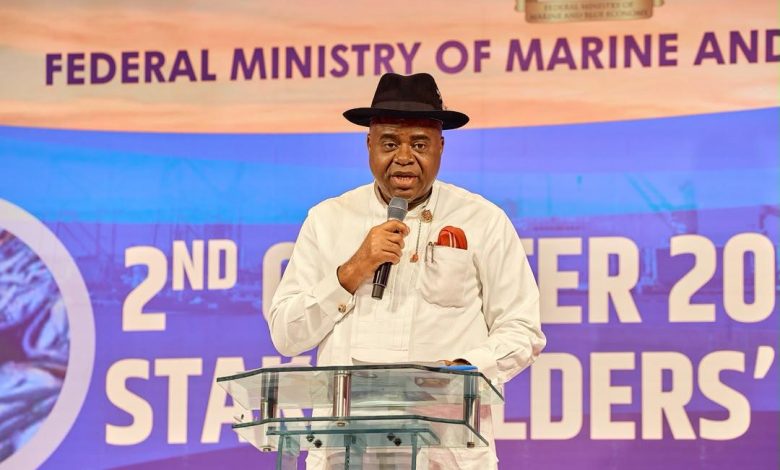
Speaking at the Federal Ministry of Marine and Blue Economy’s 2nd Quarter 2026 Citizens/Stakeholders’ Engagement held at Eko Hotel and Suites in Lagos, the Bayelsa governor said Nigeria’s extensive coastline and waterways remain underutilised despite their enormous potential to transform the nation’s economy.
Delivering a keynote address titled “Sub-National Leadership in Advancing Nigeria’s Maritime and Blue Economy: The Bayelsa Experience and Pathways for Coastal State Development,” Diri urged coastal states to move beyond being passive beneficiaries of maritime resources and become active drivers of sustainable development.
He noted that although Nigeria has more than 850 kilometres of coastline, the responsibility of unlocking its economic value largely rests with the coastal states, which possessed the rivers, creeks and waterways that could power trade, fisheries, tourism and industrial growth.
To accelerate development in the sector, Diri proposed five strategic steps for coastal states.
These included creating dedicated ministries or agencies with adequate funding and political backing, enacting state laws that aligned with the national blue economy policy, securing and mapping maritime assets, investing in coastal security and reliable ocean data, and establishing maritime training centres alongside modern fish processing and cold storage facilities that connect local producers to national and international markets.
The governor highlighted Bayelsa’s leadership in the sector, recalling that the state became the first in Nigeria to establish a standalone Ministry of Marine and Blue Economy in 2024, following the Federal Government’s creation of a similar ministry a year earlier.
According to him, the decision reflects Bayelsa’s commitment to transforming its natural aquatic resources into sustainable economic opportunities.
“To ignore the blue economy in Bayelsa is to ignore Bayelsa itself. We are not just creating institutions; we are building a model that other coastal states can adopt in developing the sector,” he said.
Diri also announced significant progress on the proposed Agge Deep Seaport, revealing that his administration has appointed a Transaction Adviser to oversee the project’s development.
He disclosed that work has already reached the inception report stage, bringing the long-awaited seaport closer to reality.
He described the Agge Deep Seaport as a strategic gateway that will stimulate regional trade, logistics, fisheries exports, industrial development and economic integration across the Gulf of Guinea.
The governor further disclosed that Bayelsa is finalising its Blue Economy Law, which would provide legal certainty for investors, protect marine ecosystems and safeguard the interests of coastal communities.
On investment opportunities, Diri said the state has begun implementing practical projects, including the Bayelsa Aquaculture Village at Yenegwe—a 127-hectare facility designed to serve as a major centre for fish production, training and enterprise development.
He explained that the project features a hatchery capable of producing more than three million fingerlings per production cycle, 500 grow-out ponds and a feed mill with a daily production capacity of 20 tonnes.
Declaring the event open, Minister of Marine and Blue Economy, Adegboyega Oyetola, said Nigeria had made significant progress since the launch of the National Blue Economy Policy, stressing that collaboration among the Federal Government, state governments, private investors and development partners is essential to unlocking the country’s maritime potential.
Also speaking, President of the Dangote Group, Aliko Dangote, represented by the Managing Director of Dangote Ports Operations, Simon Akin Omole, said Nigeria’s blue economy has moved beyond mere potential and now depends on collective commitment to attract investment, boost industrialisation and create lasting prosperity.
The event attracted major stakeholders in the maritime sector, including representatives of several state governments, lawmakers, industry leaders and development partners committed to advancing Nigeria’s blue economy agenda.