Nigeria and China are taking their decades-old diplomatic relationship into a new creative dimension, following a landmark agreement designed to connect their film and television industries and open fresh opportunities for cultural and economic collaboration.
The deal between the China Movie Channel (CMC) and the Nigerian Television Authority (NTA) was signed Friday at the China–Nigeria Film and Literature Symposium at the China Cultural Centre in Abuja.
Rather than limiting cooperation to traditional diplomatic channels, the partnership places storytelling, broadcasting and creative talent at the centre of closer relations between the two countries.
Under the agreement, filmmakers and media professionals from both sides are expected to collaborate on co-productions, exchange programmes and content distribution, while benefiting from professional training and technology transfer.
The partnership comes as Nigeria and China commemorate 55 years of diplomatic relations, giving the agreement added significance as both countries seek new ways to strengthen people-to-people connections.
For Nigeria, the arrangement could provide Nollywood with greater access to one of the world’s most developed film and broadcasting markets.
For China, it offers a deeper connection with Nigeria’s influential entertainment industry and the large African audience it reaches.
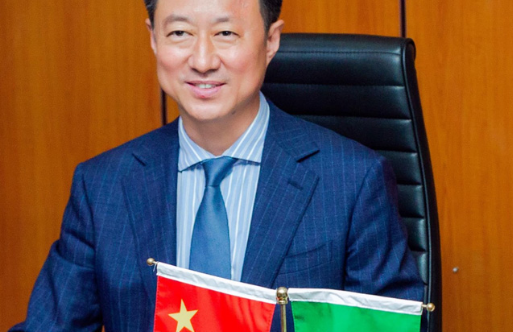
Chinese Ambassador to Nigeria, Yu Dunhai, described cinema and literature as more than entertainment, arguing that they can preserve a people’s heritage while helping nations understand one another.
He pointed to the growing interest in the creative works of both countries as evidence that culture can overcome differences that formal diplomacy sometimes cannot.
Nigerian literary icons including Wole Soyinka, Chinua Achebe and Chimamanda Ngozi Adichie, he noted, have built readership in China, just as Chinese literature has found audiences in Nigeria.
The ambassador also highlighted the remarkable scale of the two countries’ film industries.
China produces more than 700 films annually and has over 93,000 cinema screens, while Nigeria’s Nollywood produces more than 2,000 films each year.
Against that backdrop, Yu said the CMC-NTA agreement could become an important vehicle for both countries to tell their own stories while creating opportunities for people working across the creative sector.
“The content exchange cooperation agreement between China Movie Channel and NTA will build a crucial platform for the people of both nations to enhance mutual understanding and friendship,” Yu said.
He envisaged filmmakers, writers and broadcasters using the partnership not only to entertain audiences but also to capture contemporary life and protect the cultural identities of both nations.
Creative economy takes centre stage
Representing Nigeria’s Federal Ministry of Arts, Culture, Tourism and the Creative Economy, Permanent Secretary Dr Mukhtar Yawale Muhammad said the agreement fits into the country’s broader ambition to turn its creative industries into a stronger engine of economic growth and job creation.
Muhammad described the initiative as another expression of the long-standing relationship between Nigeria and China.
He also acknowledged China’s contribution to Nigeria in areas including education, technology, infrastructure and training, pointing to scholarships and cultural exchanges that have benefited Nigerians.
For Nigeria’s creative sector, however, he said the latest partnership comes at a particularly important time as the country seeks to convert its cultural assets and youthful talent into sustainable economic opportunities.
“Partnerships such as this are both timely and invaluable as Nigeria continues to unlock the immense potential of the creative and cultural industries,” he said.
He expressed optimism that cooperation with China would strengthen professional skills, facilitate knowledge sharing and give Nigerian creatives greater exposure internationally.
NTA Director-General Salihu Abdulhamid Dembos described the agreement as the beginning of a fresh chapter in Nigeria-China relations, one driven by creativity and innovation.
He said the pact establishes a framework that could see both countries exchange programmes, develop joint productions, train professionals and transfer technology.
The opportunities, he added, would extend beyond established industry figures to younger filmmakers, writers and broadcasters seeking access to international audiences.
“It will also create opportunities for our filmmakers, writers, broadcasters and young creative talents to learn, collaborate and reach new audiences,” Dembos said.
The NTA chief linked the initiative to the broadcaster’s ongoing transformation, saying international partnerships such as this could support its ambition to operate as a modern, digitally driven public broadcaster.
For literary stakeholders, the significance of the agreement extends beyond film and television.
Arc. Chukwudi Eze, chairman of the Abuja chapter of the Association of Nigerian Authors, said cultural diplomacy gives countries a way to connect at a human level, complementing political and economic relationships.
Creative works, he argued, allow people to encounter another society through its stories, emotions and experiences rather than through official statements alone.
“Through books, films, poetry, theatre and the creative arts, nations come to know one another beyond headlines and statistics, fostering mutual understanding, respect and lasting friendship,” Eze said.
He also highlighted China’s support for literary exchanges involving Nigerian authors, including a cultural and literary visit to China by Professors Razinat Mohammed and Emeka Aniagolu.
The Abuja symposium brought together diplomats, government representatives, filmmakers, writers, broadcasters and other cultural stakeholders, creating a broader platform for discussions about the future of storytelling and creative collaboration.
Participants also viewed the Chinese action film Blades of the Guardians as part of the cultural exchange activities.
The CMC-NTA agreement arrives at a moment when both Nigeria and China are looking to deepen their relationship beyond conventional government-to-government engagement.
Its potential reaches across several areas: Nigerian filmmakers could gain new platforms and technical opportunities, Chinese productions could find wider African exposure, while joint projects could create new commercial links between two enormous creative markets.
More importantly, the partnership places culture at the heart of bilateral diplomacy.
If successfully implemented, the agreement could give filmmakers, writers and broadcasters from both countries a stronger role in shaping how Nigeria and China are seen by audiences around the world.
The broader ambition is clear: move from simply maintaining diplomatic ties to building a relationship in which stories, talent, technology and creative enterprise become shared avenues for cooperation.