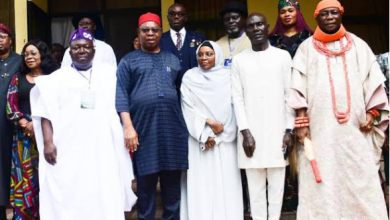
Delta State has received commendation for its sustained commitment to basic education, particularly its regular payment of counterpart funds that has enabled the state to access intervention resources from the Universal Basic Education Commission (UBEC).
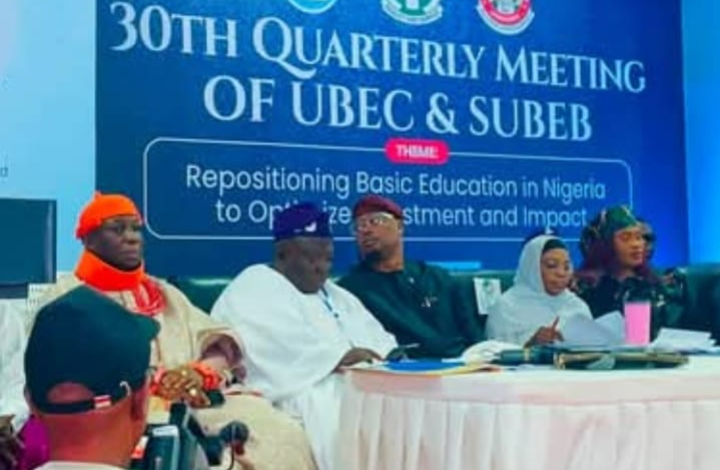
The commendation came during the 30th Quarterly Meeting of UBEC and State Universal Basic Education Boards (SUBEBs) held in Asaba, where education stakeholders reviewed ways to improve investment, planning and outcomes in Nigeria’s basic education sector.
Representing Governor Sheriff Oborevwori at the meeting, Deputy Governor Sir Monday Onyeme said education remained one of the most important investments any government could make, stressing that its real value should be judged by the quality of learning and opportunities it creates rather than simply by the amount of money committed.
He said the administration’s focus on education was central to its MORE Agenda, noting that sustainable economic and social development could not be achieved without an educated and empowered population.
“Our commitment is reflected in our consistent support for the Universal Basic Education programme. Delta State is up to date with the payment of its UBEC counterpart fund to access the Federal Government intervention funds,” the governor said.
According to him, the state’s partnership with SUBEB had translated into concrete improvements across public basic schools.
He disclosed that more than 300,000 pupils were enrolled in public basic schools across Delta, while government interventions had resulted in the construction of 174 new classrooms, renovation of 815 others, and the ongoing construction of 24 additional classrooms.
The state has also constructed 39 perimeter fences and gatehouses, among other projects aimed at improving the learning environment.
Oborevwori further expressed appreciation to UBEC for selecting Delta as host of the quarterly meeting and welcomed the approval of two additional model smart schools for the state.
Executive Secretary of UBEC, Dr. Aisha Garba, said the quarterly meeting was designed to deepen cooperation among the commission and state education boards while reviewing common priorities affecting basic education nationwide.
She noted that the sector serves more than 14 million pupils and students across the country, underscoring the scale of responsibility facing education authorities.
Garba revealed that about N177 billion in UBEC funds that had remained unaccessed by states for years was now being accessed following reforms jointly implemented by relevant authorities.
However, she cautioned that accessing the money was only the beginning, insisting that proper and effective utilisation of the funds remained crucial to achieving meaningful results.
The UBEC boss also announced several reforms, including the review of the 10-Year Strategic Roadmap for Basic Education, which will now cover 2026 to 2035.
Other initiatives included the Basic Education Action Plan Management System for digital planning, stronger minimum standards for schools, and a National Learning Assessment expected to commence by the end of 2026 or early 2027.
She also disclosed that an additional supplementary budget had been secured for UBEC and SUBEBs from 2026.
Garba specifically commended Delta for maintaining its counterpart funding obligations, saying the consistency had enabled the state to benefit from federal intervention funds.
The Asagba of Asaba, His Royal Majesty Professor Epiphany Azinge, SAN, OON, described the meeting’s theme — “Repositioning Basic Education in Nigeria to Optimise Investment and Impact” — as timely and directly connected to the future of Nigerian children and the prosperity of the country.
According to the traditional ruler, no nation can achieve lasting prosperity without making substantial investments in the education of its people.
He drew a distinction between natural resources and human capital, arguing that while oil, minerals and technology can generate wealth, education creates the people capable of discovering resources, developing technology and sustaining institutions.
“Investment in education, therefore, is not expenditure rather it is the highest form of national capital formation. The true wealth of Nigeria lies not beneath her soil but within the minds of her people,” Azinge said.
He also described basic education as the foundation upon which the entire education system and national development depend.
“Basic education represents the first and most critical stage of human development. It is here that literacy is acquired. Numeracy is developed. Character is moulded. Citizenship is nurtured and Innovation begins,” he stated.
Azinge warned that weaknesses at the basic education level could undermine higher education and national competitiveness, stressing that universities could not fully compensate for poor foundational learning.
He advocated stronger attention to teachers, technology and the demands of the industrial revolution, particularly the use of digital learning to narrow the gap between rural and urban communities.
Delta SUBEB Commends Oborevwori
Earlier, the Executive Chairman of Delta SUBEB, Mr Samuel Mariere, welcomed UBEC officials and SUBEB chairmen from across the country, describing the gathering as an important opportunity to strengthen the foundation of Nigeria’s education system.
Mariere said Delta’s hosting of the meeting reflected the importance attached to basic education and the collective responsibility of stakeholders to secure a better future for Nigerian children.
He praised UBEC for its partnership with Delta and acknowledged Governor Oborevwori’s support for the sector, particularly his attention to basic education in the state’s budgetary priorities.
The SUBEB chairman said the governor’s backing had provided the financial and institutional environment needed for the board to carry out its responsibilities effectively.
The Asaba meeting therefore ended with a shared emphasis on a central message: investment in basic education must go beyond spending money to ensuring that every naira produces better schools, stronger teachers, improved learning and brighter prospects for Nigerian children.