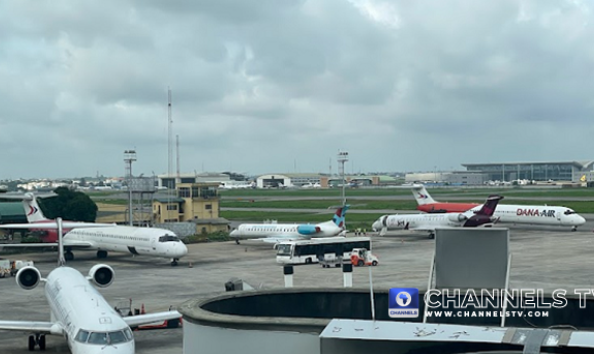
The Federal Government has appealed to domestic airline operators to refrain from increasing ticket prices or suspending flight operations despite the sharp rise in aviation fuel costs.
The call was made by the Minister of Aviation and Aerospace Development, Festus Keyamo, in a formal communication addressed to the Airline Operators of Nigeria.
According to him, the price of Jet A1 fuel has surged dramatically from N900 per litre in late February to about N3,300 per litre by mid-April 2026.
He acknowledged that the spike posed serious operational challenges for airlines but warned that an immediate increase in airfares would place an additional burden on passengers and reduce access to air travel.
The minister also urged operators to reconsider any plans to halt flight services, noting that such action could have widespread economic consequences.
He warned that a shutdown of airline operations would disrupt mobility, affect logistics networks, and weaken public confidence in the aviation sector.
To address the crisis, the Federal Government has scheduled a high-level stakeholders’ meeting for April 22, 2026, in Abuja.
The meeting is expected to bring together regulators, airline operators, and other industry players to find a practical and lasting solution to the fuel pricing issue.
The administration of President Bola Tinubu reaffirmed its commitment to supporting the aviation industry, describing it as a critical sector for national development.
He noted that ongoing reforms were aimed at strengthening the industry, improving sustainability, and supporting local operators.
Airline operators had earlier warned that they might suspend operations starting April 20, citing what they described as an unsustainable rise in fuel prices.
Under the umbrella of the Airline Operators of Nigeria, the carriers argued that the increase far exceeds global oil price trends and has made continued operations financially unviable.
They claimed that revenue generated by airlines is no longer sufficient to cover fuel costs alone, with at least one operator already grounding its fleet.
However, fuel marketers have attributed the price surge to international developments, particularly geopolitical tensions in the Middle East affecting global supply chains.
Association of Nigeria explained that disruptions in supply of refined products, including Jet A1, have driven up costs.
Marketers also questioned claims that aviation fuel now sells at N3,300 per litre, stating that their internal surveys indicated more competitive pricing across the market.
They emphasised that the distribution of aviation fuel involves strict safety protocols and specialised logistics, which contribute to higher operational costs.
The association advised airlines to consider long-term supply agreements rather than relying on spot purchases, suggesting that such arrangements could help stabilise prices and improve financial planning.
As discussions continue, the aviation sector faces mounting pressure, with stakeholders seeking a balance between operational sustainability and affordability for passengers.