The Federal Government has announced sweeping reforms in Nigeria’s education sector, including plans to abolish the separation between Junior Secondary School (JSS) and Senior Secondary School (SSS) as part of efforts to curb rising dropout rates and improve school transition.
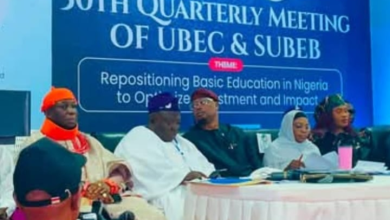
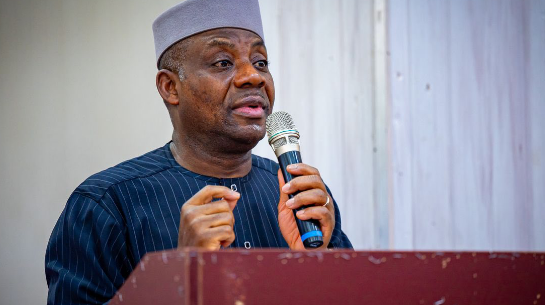
Minister of Education, Dr. Tunji Alausa, disclosed the plan on Tuesday in Abuja, saying the current structure had failed to provide a smooth academic pathway for students and had worsened the country’s out-of-school crisis.
He revealed that while Nigeria has about 80,000 public primary schools, there are only about 15,000 junior secondary schools, creating a major bottleneck that leaves millions of pupils stranded after primary education.
According to him, more than 20 million children who enrolled in primary school do not successfully progress to senior secondary education, describing the situation as a “systemic failure” that must be urgently corrected.
Alausa explained that the imbalance has led to overcrowding in junior secondary schools while many senior secondary schools remain underutilised.
He said government would present the proposal for full restructuring at the next National Council on Education meeting.
He stressed that the reform would eliminate administrative inefficiencies and ensure a seamless transition for learners across all levels of basic and secondary education.
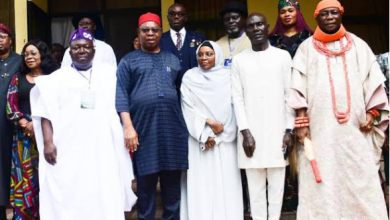
In a related development, the Federal Government has inaugurated the Tertiary Institutions National Laureate Committee to promote academic excellence and research innovation across universities and colleges.
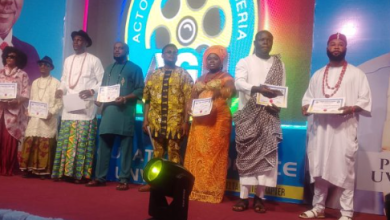
The committee would oversee a new national awards programme designed to reward outstanding undergraduate, master’s and doctoral research projects with prizes totaling about N365 million annually.
Under the scheme, the best undergraduate research would receive N35 million, master’s thesis winners N50 million, while top doctoral research would earn N100 million.
Additional thematic awards would also recognise achievements in medicine, engineering, agriculture, law, social sciences and teaching innovation.
Alausa said the initiative is aimed at repositioning education as a driver of economic growth by encouraging research that solves real-world problems and supports national development.
He added that the programme would also strengthen Nigeria’s knowledge economy by linking academic excellence with innovation and commercialisation.
The Laureate Committee, chaired by Prof. Abubakar Sambo, pledged transparency and merit-based selection, assuring that all eligible students across institutions would have equal opportunity to compete.
The inaugural National Laureate Awards are scheduled to hold in November 2026.