The Director-General of the World Trade Organisation (WTO), Dr Ngozi Okonjo-Iweala, has said Delta State has the potential to become Nigeria’s next major industrial hub if it effectively harnesses its natural resources, infrastructure advantages and human capital.
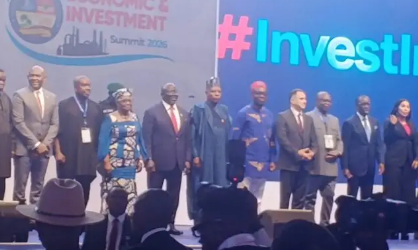
Okonjo-Iweala made the assertion on Monday at the Delta State Economic and Investment Summit in Asaba, where she urged the state government to position itself for emerging global trade opportunities capable of transforming its economy.
The summit, themed “Harnessing Our Strengths, Unlocking Our Potential,” brought together government officials, business leaders, investors and development stakeholders to explore strategies for sustainable economic growth.
According to the WTO chief, global shifts in supply chains, industrial relocation and technological advancement have created new opportunities for economies that are prepared to compete.
She said despite geopolitical tensions, climate challenges, rising tariffs and rapid technological changes, international trade had remained resilient, creating opportunities for countries and regions willing to adapt.
“Despite global uncertainty, trade has remained resilient. That means opportunities still exist for Delta, Nigeria and Africa.
”The question is whether we are ready to seize them,” she said.
Okonjo-Iweala noted that global trade in goods and services reached $34.6 trillion last year, while Africa’s merchandise exports recorded growth of more than 10 per cent, indicating that the continent could benefit from changing global production patterns.
She described the current shift in global manufacturing and investment flows as “re-globalisation,” saying Delta could position itself to attract investment if it develops the right policies, infrastructure and business environment.
“The opportunities are here. What remains is for Delta State to prioritise, execute and compete for global investments,” she said.
The WTO director-general identified Delta’s abundant natural gas reserves, coastline, seaports, fertile agricultural land, solid minerals and educational institutions as key assets that could drive industrialisation.
She, however, warned that natural resources alone could not guarantee development without effective planning, strong institutions and proper infrastructure.
“What matters is execution. Development comes from proper implementation, maintenance of infrastructure, strong institutions and clear priorities,” she stated.
Okonjo-Iweala praised Governor Sheriff Oborevwori for introducing a $100 million Viability Guarantee Fund, describing it as the type of initiative required to reduce investment risks and encourage businesses to operate in the state.
“I came because you are a governor who takes action. The announcement of the 100-million-dollar investment fund is exactly the kind of initiative we need,” she said.
The former Nigerian finance minister urged Delta State to establish world-class Special Economic Zones supported by reliable electricity, roads, rail links, water supply and digital infrastructure.
She said successful industrial parks across the world had demonstrated their ability to attract companies, create jobs and accelerate economic transformation.
She encouraged Delta officials to study successful models such as the Lekki Free Zone in Lagos and the Glo-Djigbé Industrial Zone in Benin Republic.
Okonjo-Iweala also advised the state to concentrate on agricultural value chains where it has competitive advantages rather than spreading resources across too many sectors.
“It is not enough to produce crops. You must process them, improve quality, meet international standards, provide financing and connect producers to markets,” she said.
She explained that value addition would generate more jobs, increase export earnings and create greater economic benefits than exporting raw agricultural products.
Highlighting Delta’s coastal advantages, Okonjo-Iweala said the state’s waterways, coastline and seaports could support a thriving blue economy.
She noted that Nigeria currently spends nearly $1 billion annually importing fish products despite having states like Delta with the resources to significantly increase local production.
“We should not continue spending huge amounts importing fish when states like Delta have the natural resources to produce them locally,” she said.
She called for investment in aquaculture, fish processing, cold storage facilities, marine logistics and sustainable fisheries.
The WTO chief also urged Delta to maximise its gas resources by developing infrastructure capable of supplying industries, power plants and manufacturing clusters.
She stressed that digital infrastructure and artificial intelligence would increasingly shape global commerce, encouraging the state to prepare young people and women to participate fully in the digital economy.
“The future of global trade is increasingly digital. Young people and women are already participating in the digital economy,” she said.
Okonjo-Iweala urged the state to take advantage of opportunities under the African Continental Free Trade Area (AfCFTA) by looking beyond Nigeria’s domestic market.
She said global supply chain diversification and increased African economic integration offered Delta a rare opportunity to attract investment and become a major player in regional trade.
Quoting Delta-born author Ben Okri, she encouraged the state to recognise and maximise its existing strengths.
“Don’t neglect the gold in your own backyard,” she said.
Okonjo-Iweala said Delta’s greatest asset was not only its oil and gas resources but also its people, whose creativity, skills and potential could drive inclusive economic growth.
She urged the state government to convert its advantages into concrete economic opportunities through deliberate policies, effective implementation and sustained investment.