The Hydrocarbon Pollution Remediation Project (HYPREP) says it has made significant progress in restoring Ogoniland’s environment, expanding access to potable water, improving healthcare and creating livelihoods 15 years after the release of the United Nations Environment Programme (UNEP) report on oil pollution in the area.
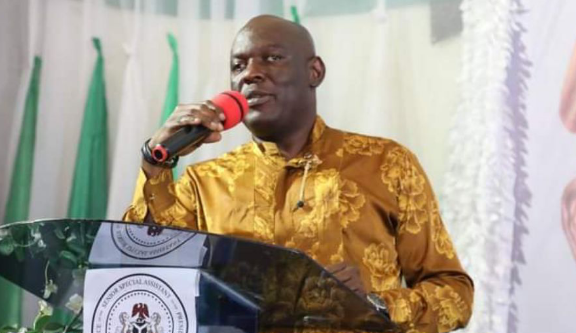
HYPREP Project Coordinator, Professor Nenibarini Zabbey, disclosed this in a statement on Tuesday to mark the 15th anniversary of the UNEP Environmental Assessment Report on Ogoniland.
The report, released on Aug. 4, 2011, documented the severe environmental and public health impacts of decades of oil pollution and recommended an initial one billion-dollar intervention for remediation.
Zabbey said HYPREP, established in 2017 to implement the UNEP recommendations, had intensified remediation efforts under the Federal Government’s Renewed Hope Agenda.
According to him, cleanup has been completed at 30 of the 65 polluted sites identified by UNEP, while remediation is ongoing at 17 medium-risk sites. Studies are also underway at the remaining 18 high-risk locations ahead of full-scale cleanup.
He said the project had also recorded major achievements in ecosystem restoration.
“Over 1.5 million mangrove seedlings have been planted, while more than 1,000 hectares of shoreline have been cleaned,” he said.
Zabbey described the exercise as the world’s largest restoration programme for oil-degraded mangrove forests, adding that it had contributed to the recovery of biodiversity and fisheries.
On water supply, he said 49 Ogoni communities had been connected to safe drinking water through integrated water schemes and wind-powered facilities.
The project coordinator also highlighted improvements in healthcare, including the near completion of a 100-bed Ogoni Specialist Hospital in Kpite and a 43-bed Cottage Hospital in Buan.
He added that health facilities in Bori, Nchia, Terabor and Kpite had been upgraded, while five ambulances had been provided to strengthen emergency medical services.
Zabbey said HYPREP had commenced a three-year human health biomonitoring study in collaboration with the World Health Organization’s International Agency for Research on Cancer (IARC) to assess the long-term health effects of hydrocarbon pollution on residents.
He noted that the project had combined environmental restoration with economic empowerment by creating more than 8,000 direct jobs and providing specialised training for youths and women in aviation, seafaring, commercial diving, software development, cybersecurity and other technical fields.
According to him, over 5,000 people have received vocational training and start-up kits, while scholarships have been awarded to more than 1,000 students, grants provided to 60 small businesses, and environmental clubs established in 31 secondary schools.
Zabbey further disclosed that the Centre of Excellence for Environmental Restoration was 96 per cent completed, while the recently designated Ogoni Wetland Ramsar Site had entered a five-year conservation programme.
“HYPREP is actively implementing all the recommendations of the UNEP Report and is creating a knowledge legacy and sustainable template for the cleanup of other oil-impacted areas in Nigeria,” he said.