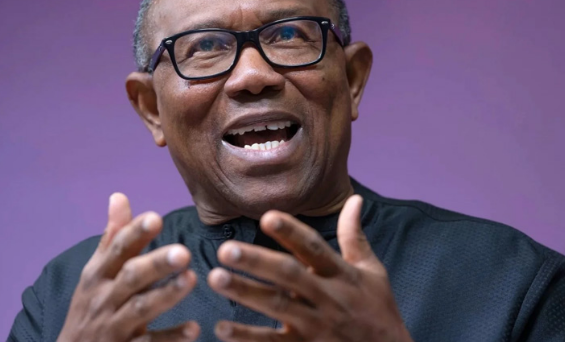
Leaders of Hausa and northern communities in Anambra State have dismissed allegations that the former governor of the state, Peter Obi, discriminated against northerners by requiring them to obtain identity cards to remain in the state.
The community leaders also rejected claims that Obi ordered the demolition of a mosque during his tenure, describing both allegations as politically motivated attempts to discredit the former governor.
Speaking to journalists in Awka and Onitsha, the leaders said their communities had enjoyed cordial relations with Obi during his administration and continued to maintain a positive relationship with him after he left office.
They cited several initiatives they said benefited members of the northern community, including free education, agricultural loans and sponsorship of residents to the annual Muslim pilgrimage to Mecca.
Those who spoke included the Secretary of the Hausa Community in Onitsha and Secretary of the Northern Community in Anambra and Delta States, Mahmud Ibrahim; the traditional ruler of the Hausa Community in Awka, Alhaji Garba Haruna; and the Chairman of the Northern Community in Anambra State, Alhaji Gidado Sidikki.
They maintained that the allegations had no basis and were being driven by political considerations.
Ibrahim said the relationship between Obi and the northern community had remained cordial, arguing that the claim that the former governor demolished their mosque was factually incorrect.
“Our relationship with Mr Peter Obi during his tenure as governor and even now is cordial. We want to say that the rumours that he demolished our mosque while he was governor is untrue,” he said.
According to Ibrahim, the mosque in question was demolished before Obi assumed office in March 2006.
“The mosque was demolished during a reprisal on us as a result of the Sharia crisis in February 2006 and Obi became governor in March of the same year,” he said.
He said Obi subsequently visited members of the community who had taken refuge at an army barracks and later accompanied them back to the location of the mosque.
“As a matter of fact, it was even Obi that came in then and visited us at the Army Barracks where we were staying as refugees and later escorted us back to the mosque and also donated money for the rebuilding of the mosque,” Ibrahim said.
He therefore questioned the basis of the allegation against the former governor.
On the controversy surrounding identity cards, Ibrahim said the northern community itself had initiated the process of issuing identification cards to its members, ” he said.
He explained that the exercise should not be confused with the Anambra State Identity Card, which he said was issued to residents generally.
“As for identity cards, I want to say that it was us, northern community in Anambra State that came together and decided that we would issue identity cards to all our brothers for identification,” he said.
He added that the state’s identity card system applied to residents generally and was not targeted at northerners.
“As for the ANIDS identity card, that one was for everybody and the governor and his commissioners and everyone in Anambra State had their own, just like myself,” he said.
Ibrahim, who said he had served as secretary of the community since that period, maintained that he was familiar with the circumstances surrounding the identification arrangements.
Traditional ruler recalls free education
The traditional ruler of the Hausa Community in Awka, Garba Haruna, also dismissed claims of discrimination during Obi’s administration.
He said he neither witnessed nor heard of a policy that discriminated between indigenous residents and people from other parts of the country during the former governor’s tenure.
“Our relationship since then and even now remains cordial. My children benefited from the free education and I want to tell you that I personally benefited from his sponsorship for Hajj,” Haruna said.
He said the relationship had continued even after Obi left office, noting that the former governor still attended community functions and extended goodwill to the community during Islamic celebrations.
“He comes here for our functions, he sends us gifts during Salah celebration,” Haruna said.
He also pointed to continued interaction between the northern community and other former political leaders in the state, citing former governor Chris Ngige as another politician who maintained contact with the community after leaving office.
Community chairman recalls N10m loan
Sidikki, the chairman of the Northern Community in Anambra State, said he was personally a beneficiary of an agricultural loan programme implemented during Obi’s administration.
He said he received N10 million under the scheme, which he estimated would be worth significantly more in today’s economy.
“The way they gave to me was the way they gave everybody. There was no discrimination and that was how everyone got,” Sidikki said.
He further claimed that the state government subsequently settled the outstanding agricultural loans on behalf of beneficiaries before Obi left office.
“We are surprised that even before he left as governor, he paid back the loan on our behalf,” he said.
Sidikki also said one of his children benefited from Obi’s free education initiative and had subsequently pursued advanced studies abroad.
“My son was also a beneficiary of Peter Obi’s free education and the boy is in China doing his PhD today,” he said.
Reflecting on his long residence in the state, Sidikki said he had lived in Anambra for about four decades, raised his family there and had five university graduates.
“I came here 40 years ago, I had my children here and I have five graduates today, so I can not say that Anambra is not good to me,” he said.
Leaders reject discrimination claims
The accounts provided by the community leaders amount to a direct rejection of claims that Obi’s administration deliberately targeted Hausa and northern residents in the state.
They argued that the historical circumstances surrounding the mosque demolition, the identity card programme and the benefits they received under various government initiatives did not support such allegations.
The leaders said their communities had maintained longstanding social and economic relationships with the wider Anambra population and urged that claims concerning their experience under previous administrations be assessed against the historical record.
They also spoke positively about their continued relationship with Obi and other political figures in the state.
Their intervention comes amid increasing political activity ahead of the 2027 general election, when the former Anambra governor is expected to remain a prominent figure in the national political conversation.
The community leaders said they would continue engaging their members on political developments as the election approaches, while expressing optimism about greater political cooperation among opposition figures.
For the northern communities in Anambra, however, their central message was that the allegations concerning Obi’s treatment of northerners did not reflect their own experiences during his administration.