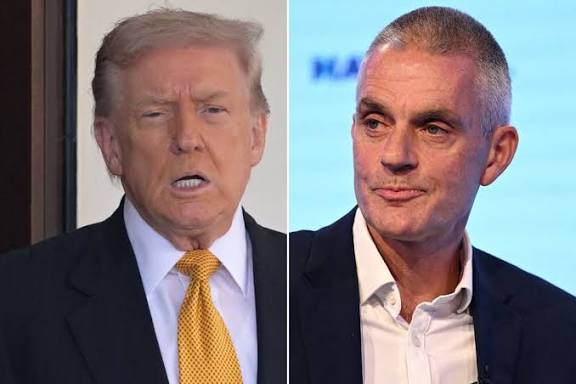
The Director-General of the British Broadcasting Corporation (BBC), Tim Davie, has resigned following mounting criticism over the editing of a documentary about former U.S. President Donald Trump, which sparked allegations of bias within the broadcast..
Davie, alongside the BBC’s Head of News Deborah Turness, stepped down after reports revealed that an episode of the flagship Panorama programme had used an edited clip of a Trump speech delivered on January 6, 2021, the day of the U.S. Capitol riot.
In the controversial edit, Trump appeared to tell supporters to “fight like hell” and march with him to the Capitol.
However, the unaltered version of the speech showed the president urging his audience to “cheer on our brave senators and congressmen and women.”
In a statement published on the BBC website, Davie acknowledged that the ongoing debate over editorial standards contributed to his decision to leave.
“Like all public organisations, the BBC is not perfect. We must always be open, transparent and accountable.
“While not being the only reason, the current debate around BBC News has understandably contributed to my decision, I have to take ultimate responsibility, ” he said.
Trump reacted swiftly to the news, calling the BBC’s leadership “corrupt journalists” who had “tried to step on the scales of a Presidential Election.”
The controversy deepened after The Daily Telegraph reported that internal concerns over the documentary had first been raised during the summer in a memo written by Michael Prescott, a former adviser to the BBC’s editorial standards committee.
On Sunday, UK Culture, Media and Sport Secretary Lisa Nandy described the allegations as “incredibly serious,” warning that they went beyond a single programme.
“It isn’t just about the Panorama documentary,” Nandy told BBC Television.
“There are wider issues suggesting systemic bias in how sensitive topics from Israel and Gaza to trans rights and U.S. politics are being reported, ” she said.
The BBC pledged to deliver a full response to Parliament’s Culture, Media and Sport Committee on Monday.
The row added to a series of recent editorial crises for the publicly funded broadcaster.
Earlier this year, the BBC apologised for “serious flaws” in the February documentary Gaza: How To Survive A Warzone, which was later found to feature a child narrator linked to a Hamas official.
In October, the UK media watchdog sanctioned the network for a separate programme deemed “materially misleading.”
White House Press Secretary Karoline Leavitt appeared to celebrate Davie’s resignation, posting on X (formerly Twitter) a screenshot of the BBC’s announcement, alongside criticism that the broadcaster had “purposefully and selectively edited” Trump’s words.
The BBC, which is financed by licence fees paid by UK households, has long faced political pressure over impartiality.
Davie’s resignation marks one of the most turbulent moments for the corporation in recent years, reopening debate about the role of public broadcasters in an era of political polarisation.