The administration of U.S. President Donald Trump has established a nearly $1.8 billion compensation fund for individuals alleging political “weaponisation,” following a settlement tied to a legal dispute involving the handling of his tax records.
The arrangement stemmed from an unusual lawsuit in which Trump filed a $10 billion claim against the Internal Revenue Service, alleging that the agency failed to prevent a former contractor from leaking his tax returns to the media.
Under the settlement, Trump would not receive any monetary payout but would be issued an official apology.
Instead, the United States Department of Justice would create a $1.776 billion compensation pool symbolically referencing the year of American independence to be distributed to individuals claiming harm from alleged government “weaponisation” or “lawfare.”
The fund would operate within the executive branch and is expected to be managed by officials aligned with Trump’s political network, though authorities insist there are no partisan restrictions for applicants.
“It is this Department’s intention to make right the wrongs that were previously done while ensuring this never happens again,” said Todd Blanche, who previously represented Trump in multiple criminal cases.
However, the decision has sparked strong criticism from political opponents and legal analysts, who argue it represents an unprecedented use of public funds.
“This case is nothing but a racket designed to take $1.7 billion of taxpayer dollars out of the Treasury and pour it into a huge slush fund,” said Democratic lawmaker Jamie Raskin.
Legal experts have also questioned the structure of the settlement, saying compensation programs of this scale are typically authorised by Congress or supervised by the judiciary.
Former compensation fund administrator Rupa Bhattacharyya described it as “completely unprecedented,” warning it could open the door to abuse and corruption.
The Justice Department has defended the initiative, insisting the programme would remain non-partisan and open to all eligible claimants.
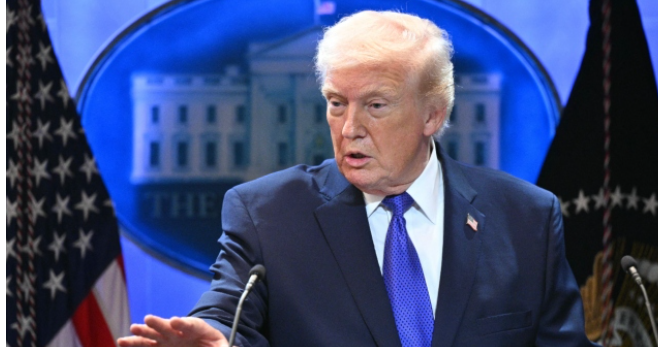
At a White House event, Trump denied direct involvement in designing the fund, although the agreement was reportedly signed by his legal representatives.
He said beneficiaries were individuals “treated brutally by a system that was so corrupt.”
The settlement also sees Trump dropping related administrative claims, including challenges linked to the FBI’s 2022 search of his Mar-a-Lago estate and investigations into alleged ties between his 2016 campaign and Russia.
The original dispute arose from actions by former IRS contractor Charles Littlejohn, who leaked Trump’s tax records to media outlets including The New York Times and ProPublica in 2019 and 2020.
He was later convicted and sentenced to five years in prison.
The leaked documents had previously reported that Trump paid little or no federal income tax in several years.
U.S. District Judge Kathleen Williams, who oversaw the case, had earlier questioned whether the parties were “truly antagonistic,” before granting dismissal and formally closing the matter.