Sanusi Warns Against Rushed ECO Currency Launch
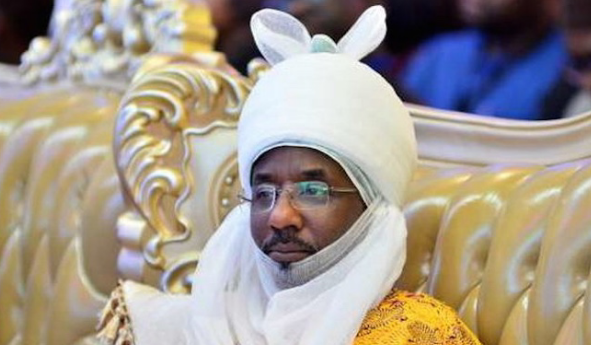
The Emir of Kano and former Central Bank of Nigeria Governor, Muhammadu Sanusi II, has cautioned ECOWAS leaders against rushing into the proposed ECO common currency.
He warned that a monetary union built on weak economies, poor fiscal discipline, and fragile institutions would likely fail.
Sanusi spoke on Thursday at a one-day policy dialogue on “ECO Currency and Monetary Integration in West Africa: Implications for Nigeria” in Abuja.
The event was organised by the National Institute for Legislative and Democratic Studies (NILDS).
He said West Africa still lacked the basic economic and institutional conditions required for a successful currency union.
“A currency is only as strong as the economy behind it,” he said.
Sanusi added that successful monetary unions depend on convergence, credible institutions, and shared prosperity, not ambition alone.
He acknowledged that the ECO project could reduce transaction costs and boost intra-regional trade.
He also noted that it could improve competitiveness and attract investment across the sub-region.
However, he warned that monetary integration must be driven by economic fundamentals, not political symbolism.
Sanusi said West Africa’s population of about 450 million and GDP of nearly $900 billion present major economic opportunities.
“The challenge is turning this population into productivity, purchasing power, and market integration,” he said.
He urged policymakers to see Africa’s youthful population as an economic asset rather than a burden.
“These youths are alive. Do you turn them into economic agents or leave them as idle bandits, terrorists and thugs?” he asked.
Sanusi said a single currency could make West Africa more attractive to global investors.
He argued that investors prefer a unified market over fragmented national economies.
However, he stressed that the ECO should come after deep economic integration, not before it.
He said monetary union is the final stage of a broader integration process, not the starting point.
Sanusi identified political commitment, strong institutions, fiscal discipline, and trade integration as key requirements.
He also listed labour mobility and financial system integration as critical pillars of success.
He warned that political tensions within ECOWAS could derail the currency project.
Sanusi specifically pointed to strained relations with Mali, Burkina Faso, and Niger under the Alliance of Sahel States.
“You cannot pursue a common currency while threatening member states,” he said.
He stressed that politics must be managed carefully for economic plans to succeed.
“The unity of West Africa is sacrosanct,” he added.
Sanusi drew comparisons with the Eurozone, noting that Europe achieved convergence before launching a common currency.
He also defended central bank independence, warning against political interference in monetary policy.
“The central bank is not a printing press,” he said.
He cautioned that excessive money printing undermines exchange rate stability and inflation control.
Reflecting on his tenure as CBN governor, he said past administrations respected central bank autonomy.
Sanusi also raised concerns over rising public debt in the region.
“We are borrowing today like there is no tomorrow,” he said.
He called for transparency and fiscal sustainability in government borrowing.
He argued that ECOWAS economies are still far from the convergence required for a viable currency union.
He noted that intra-regional trade stands at about 10 to 12 percent, compared to around 60 percent in the European Union.
“Would you give up monetary independence when trade is only 10 percent?” he asked.
Sanusi said the ECO should only proceed when economic benefits clearly outweigh costs.
He concluded that prosperity, not currency adoption, should remain the ultimate goal.
“The common currency comes last,” he said.
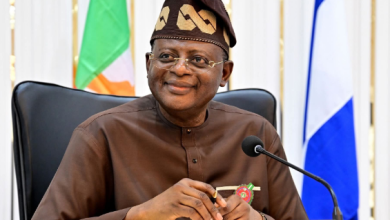
Earlier, NILDS Director-General Professor Abubakar O. Sulaiman described the ECO proposal as a major economic and political initiative.
He said it carries significant implications for sovereignty, stability, and development in West Africa.
Sulaiman said the dialogue aimed to assess practical impacts, especially on Nigeria’s economy.
He added that NILDS would provide policy recommendations to guide lawmakers on regional integration decisions.