The Federal Government is set to establish modern ranching settlements in six major farmers-herders conflict hotspots and rehabilitate 417 grazing reserves nationwide as part of a broader effort to reduce clashes and modernise livestock production.
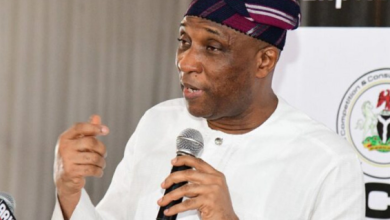
Minister of Livestock Development, Idi Mukhtar Maiha, disclosed this on Tuesday after briefing President Bola Tinubu at the State House in Abuja on the ministry’s activities and implementation of the National Ranching Policy.
The priority locations are Adamawa, Kaduna, Benue, Plateau and Nasarawa states, as well as the Federal Capital Territory.
Maiha said the government had identified 417 grazing reserves across Nigeria, with a pilot ranching project already underway in Plateau State.
The pilot is expected to demonstrate how a more settled livestock-production system can reduce cattle movement, which the government considers one of the major triggers of farmers-herders conflicts.
The minister said the government was also engaging pastoral communities, with about 34 organisations already involved in consultations on the transition from nomadic livestock production to ranching.
Further discussions are expected with pastoralist groups in the coming weeks.
According to Maiha, the traditional practice of moving large herds across the country is becoming increasingly difficult as farmland expands, cities grow and infrastructure development intensifies competition for land.
“Large number of cattle on the move is crisis-prone because, number one, the grazing routes have disappeared,” he said.
Maiha explained that cattle movement largely occurs because livestock owners must search for water and pasture.
He argued that providing those resources within designated settlements would significantly reduce the need for herds to move through communities and farmlands.
“Why don’t you provide these resources in situ and stop these animals from moving? Human beings can move; they don’t cause crisis. It’s the animals’ movement that normally generates this crisis,” the minister said.
The proposed ranching model would therefore include commercial pasture production, allowing grass to be cultivated within settlements or transported there from other locations.
The government also plans to improve livestock breeds so that farmers can keep smaller, more productive herds while increasing milk and meat output.
The proposed settlements are designed to go beyond simply confining cattle.
Maiha said grazing reserves would be transformed into integrated communities with housing, veterinary clinics, primary schools, healthcare facilities, solar power and earth dams to support pasture production.
The government expects the concentration of livestock to attract private investment in milk processing, modular abattoirs, biodigesters and other parts of the livestock value chain.
“At the end of the day, each of those grazing reserves will become an economic hub,” Maiha said.
He gave the example of a reserve housing about 30,000 cattle, saying the volume of milk produced could attract processors and create opportunities for several related businesses.
The minister said consultations so far had not produced significant resistance from pastoral communities.
“So far, we have not seen resistance from anybody because the reality on the ground is that nomadism, as it were, is no longer sustainable, and we need a different concept,” he said.
The government believes the changing realities around land use are making ranching increasingly necessary for both livestock producers and communities affected by cattle movement.
Another major component of the plan is a proposed radio-frequency identification system for livestock.
Under the initiative, cattle and other four-legged livestock would be fitted with ear tags capable of supporting identification and geolocation, as well as establishing proof of ownership.
Maiha said the system would help create a national livestock database and make it easier to trace animals that stray or are stolen through cattle rustling.
The identification programme, he added, forms part of the government’s non-kinetic approach to addressing rural insecurity.
Beyond ranching, the ministry is pursuing reforms covering modern abattoirs, dairy production, fodder cultivation, veterinary services, vaccine storage and poultry production.
Maiha said at least seven model veterinary clinics had been established, with the longer-term goal of having a model veterinary hospital in every state and more clinics in underserved communities.
The government is also developing off-grid cold-chain facilities to preserve animal vaccines at appropriate temperatures during transportation and storage.
The minister said investment was being encouraged in modern abattoirs to replace open slaughter facilities, which he described as inadequate from a public-health standpoint.
Large-scale dairy projects are also being discussed with domestic investors and development partners, while commercial fodder production is being promoted for both domestic consumption and export.
The government is additionally considering large-scale imports of hatchable eggs as part of efforts to strengthen the poultry industry and reduce delays in supplying day-old chicks.
Maiha said about 20 states had established livestock ministries or agencies since the Federal Ministry of Livestock Development was created in July 2024.
He said the development would improve cooperation between federal and state governments, particularly because land administration and many livestock resources fall within state jurisdiction.
According to the minister, Tinubu expressed strong support for the initiatives and demonstrated detailed knowledge of developments in the livestock sector.
He quoted the President as saying: “The value chains in the livestock sector are fantastic.”
Maiha said the administration’s political backing had provided the ministry with the confidence to push ahead with its reforms.
“The President has been very supportive, and we are very grateful for that political support and for the understanding we are getting from Mr President,” he said.
“For us, actually, we need not ask for more, but to go back and deliver.”
The government hopes the ranching programme will simultaneously reduce farmer-herder tensions, improve livestock productivity and unlock a wider commercial ecosystem around Nigeria’s meat, dairy and animal-health industries.