Tinubu declares emergency on poverty, insecurity …Labour, opposition demand urgent national reforms

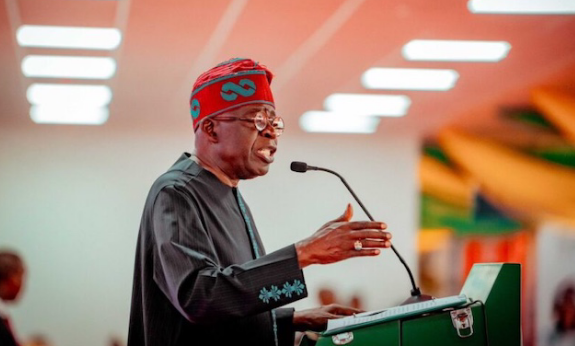
President Bola Tinubu’s declaration of a national emergency on poverty and insecurity during the 2026 May Day celebrations has sparked widespread reactions from opposition figures and organised labour, who are demanding sweeping reforms to address Nigeria’s worsening socio-economic conditions.
Tinubu made the declaration in Abuja on Friday while addressing workers and labour unions, in a speech delivered on his behalf by the Secretary to the Government of the Federation, Senator George Akume.
He linked the declaration to the global Decent Work Agenda of the International Labour Organisation (ILO), stressing that decent employment cannot exist where insecurity and poverty persist.
“There cannot be decent work where workers fear for their lives, where wages cannot feed a family, or where insecurity disrupts farms, factories, markets, and other economic activities,” he said.
The President described insecurity and poverty as “hydra-headed challenges” that have been treated as a national emergency due to their impact on productivity, livelihoods, and investor confidence.
Tinubu outlined several ongoing interventions under his administration’s Renewed Hope Agenda, including expanded cash transfer programmes reaching 15 million households and claims of lifting 7.5 million Nigerians out of poverty.
He also cited infrastructure projects such as the Lagos-Calabar Coastal Highway and Ajaokuta-Kaduna-Kano Gas Pipeline, which he said have created over 600,000 jobs.
According to him, his government has implemented a new national minimum wage, cleared pension arrears, and resumed gratuity payments from January 2026.
He added that more than 800,000 informal sector workers have been enrolled in the micro pension scheme, while over one million small businesses have benefited from a N200 billion MSME support fund.
Tinubu also said the administration has launched the Community Protection Guards Initiative, recruiting over 45,000 youths to strengthen local security, alongside the deployment of 10,000 Agro-Rangers to protect farmlands.
The President appealed to labour unions to sustain dialogue with government and avoid industrial actions.
“Strike should be the last resort, not the first,” he said, urging continued cooperation to drive reforms.
He reiterated that his administration remains committed to improving workers’ welfare, fair wages, and safer working conditions, while acknowledging the sacrifices of security personnel in tackling insecurity.
In a joint May Day message, the Nigeria Labour Congress (NLC) and Trade Union Congress (TUC) raised concerns over insecurity, inflation, and economic hardship.
NLC President Joe Ajaero and TUC President Festus Osifo warned that labour would only support political parties that commit to workers’ rights, security, free education, and quality healthcare ahead of the 2027 elections.
They criticised recent government policies, saying they prioritise technical economic targets over workers’ welfare and national development.
“What is urgently required is a shift toward a production-driven economic strategy; one that prioritizes domestic industry, supports agriculture, and provides affordable credit to small and medium enterprises,” they said.
The labour leaders also stressed that true economic stability should be measured by jobs, wages, and access to essential services not just inflation or exchange rates.
Opposition leaders also weighed in on the President’s declaration.
Labour Party’s Peter Obi called for leadership based on competence and capacity, while African Democratic Congress (ADC) leader David Mark pledged a living wage for workers if elected.
Former Vice President Atiku Abubakar criticised the administration, accusing it of worsening hardship through poor governance and ineffective policies.
The Minister of Labour and Employment, Mohammed Maigari Dingyadi, said the ministry has introduced reforms aimed at improving labour administration and workers’ rights.
He listed initiatives including a revised National Employment Policy, strengthened occupational safety regulations, and a new national policy on child labour aimed at eliminating exploitation in the workplace.
The May Day declarations highlighted increasing pressure on the Tinubu administration from both labour unions and opposition parties, as economic hardship and insecurity remain central national concerns ahead of the 2027 general elections.