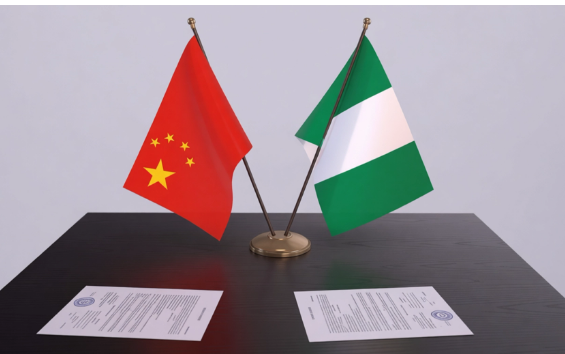
Nigeria and China have renewed efforts to expand bilateral cooperation in tourism, culture, and the creative economy as both countries seek to strengthen economic growth, cultural diplomacy, and people-to-people relations.
The commitment was reaffirmed at the 2026 China Tourism Day celebration organised by the China Cultural Centre in Nigeria (CCIN) in Abuja, where diplomats, government officials, tourism stakeholders, artists, and cultural enthusiasts gathered to highlight growing collaboration between both nations.
Speaking at the event, Chinese official Yang Jianxing said tourism remained a key instrument for promoting mutual understanding and strengthening international relations.
He noted that this year’s theme, “Enjoying Quality Tourism, Exploring Beautiful Landscapes,” reflects the rising global importance of tourism as a platform for cultural exchange and peaceful coexistence.
Yang said both Nigeria and China are rich in cultural heritage and tourism assets that can further deepen cooperation, pointing to landmarks such as the Great Wall of China and Mount Tai, as well as Nigeria’s Osun-Osogbo Sacred Grove and Zuma Rock.
He added that these sites represent enduring cultural symbols that continue to connect civilizations across continents.
According to him, several joint cultural programmes between both countries, including the Happy Chinese New Year celebrations and China-Nigeria Cultural and Tourism Festivals, have helped expand artistic exchange, traditional exhibitions, and culinary interactions.
“These activities have not only strengthened friendship between our peoples but have also promoted the spirit of harmony, mutual respect, and cultural inclusiveness,” he said.
Yang also stated that China was ready to deepen cooperation with Nigeria under the China-Africa Year of People-to-People Exchanges, with new opportunities expected in heritage preservation, tourism development, cultural innovation, and the creative industries.
He encouraged increased travel and educational exchanges, expressing optimism that more Nigerians would explore China while more Chinese visitors discover Nigeria’s cultural diversity and tourism potential.
Also speaking, Abdulkarim Ibrahim described the gathering as another milestone in the long-standing diplomatic and cultural relationship between both countries, which has lasted for more than five decades.
Representing the Minister of Art, Culture, Tourism and Creative Economy, Hannatu Musawa, Ibrahim said Nigeria has benefited significantly from cooperation with China, especially in training, education, and cultural development.
He revealed that Nigerian acrobats trained in China were now performing internationally, showcasing Nigeria’s cultural identity on the global stage.
Ibrahim also shared his personal experience as a beneficiary of a Chinese government scholarship at Peking University, describing it as proof of the depth of bilateral relations.
He praised China’s investment in cultural preservation, tourism infrastructure, and urban development, noting that Nigeria could draw useful lessons from its tourism model.
He added that Nigeria possessed vast untapped cultural and tourism resources capable of contributing significantly to national development and job creation if properly harnessed.
According to him, the Federal Ministry of Art, Culture, Tourism and Creative Economy remains committed to building stronger international partnerships that attract investment, encourage innovation, and expand opportunities across the tourism sector.
He urged stakeholders in both countries to strengthen collaboration aimed at protecting cultural heritage, supporting creative talents, and building a globally competitive tourism industry.