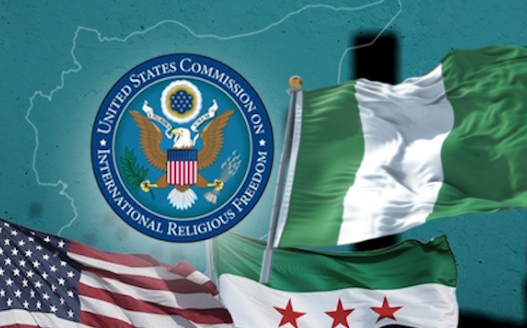
The United States Commissioner on International Religious Freedom (USCIRF) has stated that violent attacks attributed to Fulani militants in Nigeria are not driven by religion alone, but by a combination of overlapping factors.
In a May 2026 report titled “Non-state Violators of Religious Freedom in Nigeria: Fulani Militants,” the commission also noted that both Christian and Muslim communities have been affected by the violence across different regions of the country.
The report estimated that about 1.3 million Nigerians have been displaced in the Middle Belt as a result of sustained attacks, killings and forced migration linked to militant activities.
While acknowledging that Christian communities have frequently been targeted, the report stressed that Muslim communities have also suffered attacks, including killings, kidnappings and raids on religious sites.
According to the USCIRF report, armed actors from a Fulani ethnic background have perpetrated some of the most visible and deadly attacks on religious communities often but not exclusively against Christians in Nigeria.
It further stated: “Fulani assailants have not spared Muslims, raiding herders’ cattle and violently attacking non-Fulani Muslim communities.”
The commission added that many attacks have also involved Christian communities in the Middle Belt and increasingly in southern Nigeria, where homes and churches were burned and residents kidnapped or killed.
The report described Fulani militant violence as one of the deadliest security threats affecting religious groups in Nigeria.
“Violence by Fulani militants caused the highest number of deaths among all religious communities in Nigeria over the last year as compared to attacks by organised insurgent groups and criminal gangs,” it stated.
It added that attacks have resulted in the displacement of at least 1.3 million people, forcing many into overcrowded and unsafe camps.
“These Fulani militant attacks, among those of other actors, have forced at least 1.3 million people in the Middle Belt off their land and into overcrowded, unsanitary, and unsafe conditions in displacement camps,” the report said.
The commission also alleged that some attacks were timed around Christian holidays such as Christmas and Easter to intensify fear and psychological trauma.
The USCIRF, however, warned against viewing the violence solely through a religious lens, noting that economic, environmental and criminal factors also contribute.
It said while some analysts interpret the situation as targeted persecution of Christians, others link it to land disputes, poverty and resource competition.
“In fact, multiple and overlapping factors, including religion in many cases, likely spur Fulani militants to attack communities or individuals,” the report stated.
It added that regardless of motivation, both Christian and Muslim farming communities suffer similar consequences, including loss of lives, livelihoods and access to places of worship.
The commission concluded that despite security measures and diplomatic engagements, violence in central Nigeria persists.
It described the situation as an “intense, daily, and seemingly perpetual crisis of insecurity,” driven by repeated attacks, kidnappings and raids on rural communities.
The report noted that the continuing unrest has left large parts of the Middle Belt unstable, with displacement and fear remaining widespread among affected populations.