Fresh hostilities between the United States and Iran have raised concerns over the future of an already fragile ceasefire, as diplomatic efforts aimed at ending months of conflict continue to face significant obstacles.
Despite weeks of negotiations marked by intense rhetoric and intermittent military confrontations, both sides remain unable to reach a comprehensive agreement that would bring the conflict to an end and restore normal shipping activities through the Strait of Hormuz, a crucial route for global oil transportation.
Major disagreements persist over Iran’s nuclear programme and the ongoing conflict in Lebanon.
Tehran has repeatedly insisted that any broader settlement must address the fighting in Lebanon, while Washington continues to focus on security concerns linked to Iran’s nuclear ambitions.
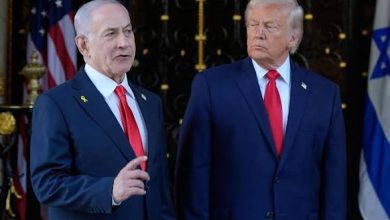
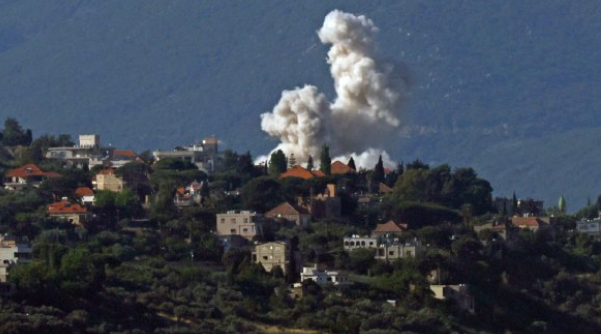
The latest military exchanges occurred as Israel intensified its operations in Lebanon. Israeli Prime Minister Benjamin Netanyahu signalled that military actions would continue, pledging to advance deeper into Lebanese territory.
The U.S. military disclosed that it conducted what it described as “self-defense strikes” against Iranian radar installations and drone-control facilities in southern Iran during the weekend.
According to Washington, the operation was the third wave of such strikes within a little more than a week.
American officials said the attacks were launched in response to the destruction of a U.S. MQ-1 surveillance drone.
Iran responded swiftly. The Islamic Revolutionary Guard Corps announced that it had targeted an “air base from which the attack originated” and which was allegedly being used by US forces.
State broadcaster IRIB reported the statement but did not identify the location of the facility.
The announcement followed reports from Kuwait’s military, which stated that its air defence systems intercepted what it described as “hostile missile and drone attacks.”
However, Kuwaiti authorities did not specify the source of the attacks.
Negotiations over Iran’s nuclear programme had already been underway when a major escalation occurred in February.
During that period, coordinated U.S. and Israeli air and missile strikes reportedly eliminated several senior figures within the Iranian leadership.
Iran has consistently maintained that its nuclear activities are designed solely for civilian purposes.
However, the United States and its Western allies remain unconvinced, arguing that the programme could ultimately be used to develop nuclear weapons.
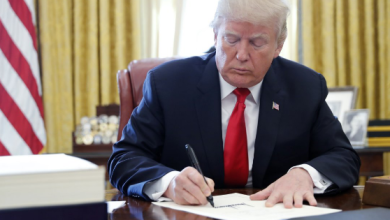
Recent reports by The New York Times and Axios indicated that U.S. President Donald Trump had submitted a revised and more stringent framework for consideration by Iranian officials.
Details of the proposal have not been publicly disclosed.
Trump has repeatedly stated that his administration’s priorities are preventing Iran from obtaining nuclear weapons and ensuring unrestricted access through the Strait of Hormuz.
“The one guarantee that I have to have is that there will be no nuclear weapons. They’ve agreed to that, and it was very interesting,” Trump said during an interview with his daughter-in-law, Lara Trump, on Fox News.
In a post on Truth Social late Sunday, the U.S. president further emphasised that the proposed agreement “states, very clearly, that Iran will not have a Nuclear Weapon”.
Iranian officials, however, have questioned Trump’s characterisation of the negotiations, insisting that substantial differences remain unresolved.
“We will not approve any agreement until we are certain that the rights of the Iranian people have been upheld,” Iran’s chief negotiator, Mohammad Bagher Ghalibaf, said in remarks broadcast on state television.
According to Iran’s Tasnim news agency, discussions on the draft agreement are continuing, with both sides regularly exchanging proposed amendments.
Iranian Foreign Minister Abbas Araghchi also urged caution regarding reports surrounding the talks.
“Until a clear conclusion is reached everything that is being said now is speculation,” he stated, according to Iranian state television.
Tehran has maintained that the release of approximately $12 billion in frozen Iranian assets is a prerequisite for meaningful progress in negotiations.
Iranian officials have also dismissed earlier suggestions by Trump that the country’s stockpile of enriched uranium would be destroyed under a future agreement, describing such claims as unfounded.
Pressure is mounting on the Trump administration to secure an agreement capable of ending the competing U.S. and Iranian restrictions around the Strait of Hormuz, a waterway considered vital to international energy markets.
While Trump recently stated that Iran would impose “no tolls” on vessels passing through the strategic route under a future deal, Iranian media disputed the claim.
The Fars news agency quoted sources as saying that “no such clause” currently exists in the negotiating framework.
Adding to the uncertainty, Iran’s ISNA news agency cited lawmaker Alireza Salimi as saying that a proposal concerning Iranian “management and sovereignty” over the strait would soon be presented to parliament.
The plan reportedly includes the possibility of collecting administrative fees from vessels using the route.
The situation in Lebanon remains another major obstacle to a comprehensive peace agreement.
Iran has repeatedly argued that any lasting settlement must address the ongoing conflict between Israel and Hezbollah.
Lebanese authorities have accused Israel of implementing a “scorched-earth policy” as military operations continue across parts of the country.
Although a ceasefire between Israel and Hezbollah officially came into effect on April 17, both parties have repeatedly accused one another of violating its terms, preventing the truce from taking hold.
On Sunday, an Israeli strike in southern Lebanon reportedly killed eight people, including three women, according to the Lebanese Health Ministry.
Diplomatic sources also disclosed that the United Nations Security Council is scheduled to hold an emergency meeting to discuss the widening Israeli offensive and the recent capture of the historic Beaufort Castle.
Describing the development, Netanyahu called the recapture of Beaufort “a dramatic shift”, signalling what Israel views as a significant military and strategic achievement.
As fighting continues across multiple fronts and negotiations remain deadlocked, prospects for a breakthrough agreement appear uncertain, raising fears of further instability across the Middle East.