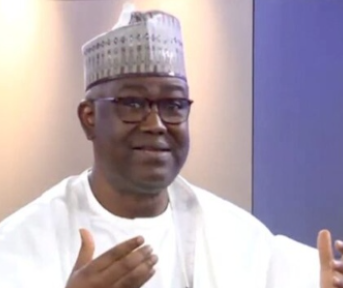
Former Accord Party presidential candidate, Gbenga Olawepo-Hashim, has urged Nigeria to strengthen cooperation with neighbouring countries and international partners as part of efforts to tackle insurgency and growing insecurity across the country and the wider Sahel region.
Speaking during an appearance on Politics Today on Tuesday, Olawepo-Hashim argued that Nigeria cannot effectively defeat insurgent groups without a coordinated strategy involving countries within the region.
His remarks come at a time of heightened concern over security challenges nationwide, particularly following the recent abduction of teachers and students in Oyo State, an incident that has generated widespread public condemnation and renewed calls for urgent action.
According to him, security threats operating across the region have become increasingly interconnected, making it impossible for Nigeria to confront them in isolation.
“Now, you can’t deal with these things if you are at loggerheads with your neighbours Mali, Niger, and Chad. You must have an integrated strategy,” he said.
Olawepo-Hashim disclosed that one of his first steps would be to convene an international security conference aimed at bringing together key regional and global stakeholders to develop a unified response to insurgency.
“So, the first thing I’m going to do is to have an international conference on security here, not a local conference.
”You need the input of our neighbours Chad and Niger and the cooperation of Mali and Burkina Faso,” he stated.
He stressed that the crisis extended beyond Nigeria’s borders and requires the involvement of major international actors already engaged in security operations within the Sahel.
“You need global cooperation because the Russians are dealing with this issue on behalf of Mali in the Sahel region, and you also need the French, who were part of the problem in the first place,” he added.
The human rights activist linked the current instability in the region to developments that followed the conflict in Libya, arguing that inadequate post-conflict measures contributed to the spread of extremist groups across several countries.
“All of these problems are linked with what happened in Libya and the importation of a host of extremist groups to that area, and cleanups were not done,” he said.
He further noted that extremist networks now provide support and guidance to various armed groups operating throughout the Sahel, making the security situation far more complex than many people realise.
“So, these guys are advising all manner of groups across the Sahel region, not just in Nigeria. So, you are dealing with a much more complicated crisis than people are able to admit,” Olawepo-Hashim stated.
The former presidential candidate also criticised Nigeria’s political leadership, blaming poor understanding of national security issues for the country’s persistent security challenges.
According to him, many policymakers fail to appreciate the broader implications of security when formulating government policies.
“The problem we have now is that even most of the political leaders don’t understand what is called national security. Because I see it in the way the government formulates policies,” he said.
His comments add to the growing national debate on how best to address insecurity, as citizens continue to demand stronger measures to protect lives and restore confidence in the country’s security architecture.