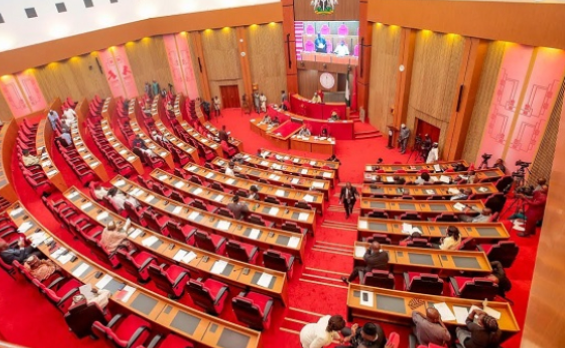
The Senate has suspended moves to establish an Internal Tender Board for the National Assembly, with lawmakers insisting that the legislature must first improve transparency in its own budgeting and financial management processes.
The proposal, sponsored by Senator Sunday Steve Karimi (APC, Kogi West), was withdrawn on Thursday after strong objections from senior lawmakers, including Senate President Godswill Akpabio, who argued that the move was premature.
Karimi had proposed the creation of the board to oversee procurement activities within approved budgetary provisions, describing it as a step towards strengthening parliamentary autonomy, accountability and efficiency.
He based his argument on constitutional provisions granting the National Assembly financial independence through first-line charges on the Consolidated Revenue Fund and the power of each chamber to regulate its internal administration.
According to him, an internal procurement structure would help the legislature manage its resources more transparently and in line with its status as an independent arm of government.
However, the proposal faced resistance from Senator Adamu Aliero, who argued that lawmakers were attempting to address procurement without first tackling deeper financial management concerns within the National Assembly.
“We are putting the cart before the horse,” Aliero said.
He maintained that the major challenge was not procurement but the lack of openness around the legislature’s budget process.
Aliero said senators often had limited access to details of the National Assembly’s budget and called for the establishment of a Budget and Research Office to enable lawmakers properly scrutinise financial allocations and spending.
“What is happening today is that we don’t even know and we don’t even see the budget of the National Assembly being presented here so that we can interrogate and understand the lines of expenditure,” he said.
He urged Karimi to withdraw the motion until broader financial accountability issues were addressed.
Akpabio also opposed the timing and approach of the proposal, saying such a sensitive issue should have first been discussed with the Senate leadership and National Assembly management before being presented on the floor.
The Senate President questioned why lawmakers should debate the creation of an Internal Tender Board publicly when many members were still seeking clarity on the institution’s financial operations.
“Talking about Internal Tender Board and all that, should this be in the public glare before we clean up our house?” Akpabio asked.
He said the legislature needed to first understand its own budget — including how much was allocated, how funds were distributed and how expenditures were managed.
“This motion is premature,” he said.
Following the intervention, Akpabio asked Karimi to withdraw the proposal.
Before withdrawing it, the Kogi West senator sought clarification on whether the Clerk to the National Assembly had discussed the matter with the Senate President.
Akpabio responded that he had not been consulted, adding that his opposition was not to the idea itself but to the contents and timing of the proposal.
“I am not opposed to the motion but I am opposed to the content of the prayers,” he said.
Karimi subsequently withdrew the motion, and Akpabio declared it formally withdrawn.
The development has placed on hold plans for an Internal Tender Board, while the Senate leadership indicated that lawmakers would first seek a clearer understanding of the National Assembly’s budget, finances and expenditure structure before considering further procurement reforms.
The debate also exposed concerns among lawmakers over limited knowledge of the legislature’s internal financial processes, renewing calls for greater transparency and accountability in the management of National Assembly funds.